
Zero. Looking Back
In the blink of an eye, it's almost the time where both sides are "even," and I finally realize how the repayment was made:
5 years of youth <-> Resources and opportunities
Learning Harvest
Among 51 blog posts:
-
TypeScript: TS features x19, d.ts x1
-
VS Code: VS Code extensions x3
-
React: React new features x9, Taro x1
-
Standards: ESn x3, Generator and Async function x1
-
Backend related: Query Builder x1, Token-based login x1, BFF x1
-
Node.js: 10 years of Node.js history x1
-
Compilers: Theory x1, Implementation x1
-
Functional Programming: Haskell x1, Side effect handling x1
-
Tools: Git Submodule x1, Babel x1, Lottie x1
-
Small toys: emoji utils x1
-
CSS: CSS Feature Query x1, Flexbox calculation rules x1
I boarded the TypeScript ship and sank six months into it, uncovering some small secrets of VS Code. I'm barely keeping up with new React features, and the common-sense gaps in the backend are being filled bit by bit. I caught up on three years of ES standards in one go, finished a stage of functional programming, and almost said goodbye to the Web environment for tools, toys, and CSS... I've accumulated a lot of technical knowledge, but the resulting technical ability and value output are not significant. My knowledge boundaries are extending backward and downward.
Goal Completion
-
Frontend technology ecology focused on the React system and extended cross-platform solutions like Taro.
-
No further ideas for an ideal framework, and a lack of practical scenarios.
-
Dove into some small points in algorithms, but similarly restricted by a lack of actual scenarios, it didn't continue.
-
No progress in presentation skills; after habits were broken, it has been stalled until now.
-
No deeper dives into design aesthetics, still staying at the common-sense stage of alignment and contrast.
-
Some insights in thinking, but not yet systematic, and haven't formed a thinking pattern suitable for myself.
-
English has regressed rather than progressed, with familiar words gradually becoming blurred in memory.
Only the main line in the React system saw some action; frameworks, algorithms, presentation, design, and English haven't improved much. The overall completion rate is very low. Actual actions deviated from the plan—on one hand, my willpower is not what it used to be, and on the other, the plan might not have been that appropriate.
Growth Experience
Among 50 mood records in a year:
-
Lack of planning: Time and efficiency x11, Goal-oriented x3
-
Starting to think: Thinking and reflection x4, Initiative and change x4
-
Decline in self-control, some habits gradually broken: Slow pace and persistence x8, Self-control x4
-
Gains: Insights x12, Experience x2
Time management and efficiency issues have remained unresolved. Thinking ability is being consciously strengthened, and experience-based insights are gradually increasing, but self-control has clearly declined.
Starting in October, a six-month period of focused dedication was the only large, continuous block of time invested in these three years. With sustained resource support, I pushed some points to the limit, during which I also forged a deep bond with VS Code and TypeScript.
One. Insights
Systematic Thinking
Think more about technology from a systematic perspective and strengthen the ability for systematic construction.
From the day I received this feedback, I have been occasionally pondering the definition of "systematic." What kind of thinking style counts as systematic?
After a year and a half, I understood that the synonyms for "systematic" are "chain" and "closed loop," i.e., "thinking from the perspective of a chain," which further refined into "closed-loop thinking." It seemed closer, but I always felt some distance, unable to touch it clearly.
Only recently did I realize that the most apt explanation is actually "story (telling)":
Systematic thinking is connecting the various parts of a story closely together.
There is a background, a center, a main line, and a context. Putting a matter into a large background, clarifying its central meaning, extending a main line, and then bringing in related matters and roles to form a context creates a system, corresponding to this leaf model:
[caption id="attachment_1981" align="alignnone" width="969"]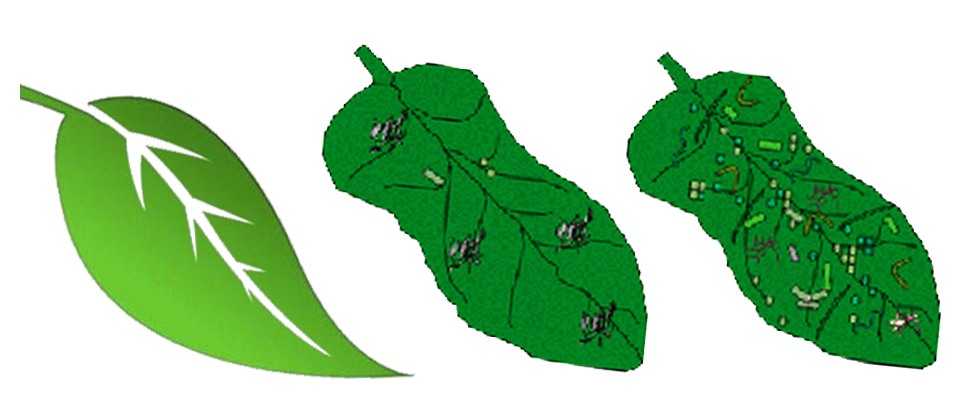 leaf model[/caption]
Therefore, systematic thinking is a method of analyzing problems from a global perspective. Connecting a problem with the main line and the large background is what is called a chain; a circular one is a closed loop.
Models
In the field of mathematics, a synonym for a model is a formula. Establishing a mathematical model to describe a practical problem, and then solving the practical problem by solving the mathematical problem. This modeling approach actually applies to all problems, for example, as Fei-ge said:
How many times have I told you? Use the platform's model to measure requirements; don't just add every feature into it.
Every product has its model attributes, which determine what the product is suitable for and what it shouldn't do. Similarly, every solution has a corresponding model. The process of solving a problem is:
-
Linking the problem to the model
-
Running the model to find a solution
How to link it is the key. When facing problems that should be solved by the model but cannot be directly solved by the current model, there are two choices: either reverse-engineer to enrich and improve the model, or provide a less direct way to solve it through the existing model. Therefore, in many cases, for the healthy development of the model, one should—or even must—choose the latter.
Listening and Speaking
Compared to listening, we are always more eager to speak because it's human nature to crave expression, to win recognition, to be heard, and to be respected:
Humans are born able to make sound, shouting "Hello World" to the universe with a loud cry, bursting with new life to shout "I am here, I am who I am."
But listening is often more powerful than speaking, and at the same time, listening is harder than venting. I first learned the importance of listening from the book Men Are from Mars, Women Are from Venus:
A woman under stress is not in a hurry to solve her problem. She first wants to speak out her true feelings and evoke understanding and empathy from others. Only then can she feel relieved and comfortable.
Not listening and only speaking blindly is meaningless:
When a man sees a woman in a bad mood, he hurriedly puts on the "Mr. Fix-It" hat, points out the woman's problems, and provides solutions for her. This only makes the woman feel worse!
If people are viewed as pipes, then listening is the input method, and speaking is the output method. Processing what is heard and then speaking it out is understanding; connecting two pipes is resonance.
Why I Blog
When we first met, you wouldn't go out until you finished writing your blog every week.
Now that it's been a year, it has become:
I just watched you write your blog for two days.
So, why write a blog? Why write every week?
In form, I write it down mostly because I can't remember it, and others are things that don't need to be remembered—just check as needed. Therefore, blogs are mostly self-oriented, mainly for organizing knowledge and summarizing experience, with no forward-looking prophecies and few insights that span history.
As for writing one post a week, it's because since then, time has been forced to run at high speed in units of weeks, version numbers increase one by one, and calendars quickly turn gray row by row... A blog is similar to a weekly report, a kind of periodic reflection and precipitation. And a week is a fairly appropriate timeframe, enough to produce some progress and gain some experience.
Week after week, like tracks extending forward on a playground, once you stop to catch your breath, it might end there. Therefore, a period is also a constraint, a habit that I am unwilling to break even when it is hardest to persist.
On the other hand, writing a blog is actually a creative process, definitely not just organizing materials, but a process of internalizing and refining. There are often new discoveries during the process, so every article has its soul, acting like an index of knowledge, for example:
These enhancements made Class the only option with complete component characteristics. Although Class also has many problems, it is irreplaceable. — The Rise of Functional Components
Query Builder separates the creation of a Query from its serialization. — Raw SQL, Query Builder, and ORM
Code that is truly intrinsically related is torn apart by lifecycles, while completely unrelated code ends up together in one method. — Introduction to React Hooks
More interestingly, Render Props and HOC can even be converted into each other. — Logic Reuse Between React Components
Articles without a soul are just junk in the memory of the internet.
Walking on One Leg for 10 Years
It's really not easy to walk on one leg for 10 years; it's time to slowly grow the other leg.
After walking the pure technical route for 10 years, a predecessor seemed to see the limitations and the end of this direction:
At this point of working on the front line for nearly 10 years, I found that the pure professional technology route provides less and less space for further enhancing the value for the team.
The straightforward technical route gets "narrower" as you go, not because all techniques worth studying are known, but because continuing to strengthen individual combat capability is hard to produce obvious contributions to the team and the enterprise.
That is to say, at this stage, the value output of personal technology to the enterprise has tended to maximize. It is difficult to have a breakthrough in value solely by improving technical strength, and one has to step out of the role of a technical leader to consider transformation in either people or matters.
If I were to stubbornly finish 10 years of tracks, my technical achievements might not match the predecessor's, and my ability in people or matters might not necessarily be outstanding. The predecessor is already standing in the distance and saw the end at a glance, while I am hesitating forward on the same journey, fortunately having foreseen the future through the back in the distance.
So, what is the route suitable for me, and how can I carve out my own characteristics?
... There is no definite answer yet, but it's time to try bravely.
Two. Goals
Year 4
-
Backward: Not switching to the backend, but extending from the frontend to the back.
-
Downward: Not diving into algorithms, but Node.js C++ extensions.
-
Expression: Listen first, then speak.
-
Thinking: Strengthen systematic thinking ability.
-
Absorbing: The company provides so many resources, but unfortunately, I only realized it until now.
Meet a Better Self
Ordinary people learn from their own mistakes; wise people learn from the mistakes of others.
Not just mistakes—correctness can also be learned.
Cultivating Influence
Later, I understood that external output is the output of influence. Besides bringing a certain income, it can also bring a lot of connections—because too few people do this; and people who like to output will still look for similar people. This is the Matthew effect: as output increases, influence grows larger and larger.
While accumulating and sharing technical knowledge, output personal influence along the way. I should have started doing this earlier, but it's not too late now:
The best time to plant a tree was ten years ago. The second best time is now.
Time Management
Planning and time management are important because:
Inefficiency wears down enthusiasm.
Although willpower and persistence are prerequisites, milestone-style phased achievement incentives are also key. Just like running at a constant speed versus variable speed—a flat constant speed will accumulate pain and suffering, while a brisk variable speed can make the whole process well-paced:
4 steps one breath, 6 steps one breath; finally, I found the free breathing method is the most relaxed.
From Knowledge to Value
On a macro level, technology must connect with business to generate value. Conceptualizing the relationship between knowledge and business, it's like this weightlifting model:
 -           -
| |---------| |
 -  \  ○  /  -
     -( )-
      | |
    --   --
   |       |
The two arms represent technical knowledge and business knowledge, respectively. The two barbell plates are technical ability and business value.
That is to say, knowledge determines muscle strength, while business value is the weightlifting result. More importantly, strong muscles and heavy barbell plates are not the key; only when the strength of both arms is coordinated and the weight on both sides is balanced can a beautiful weightlifting movement be completed without falling.
Three. Plan
Right here, right now, change immediately.
Main Line
-
Backward
-
Influence
-
Thinking ability
Side Line
-
The art of presentation
-
Downward
Daily
-
Expression
-
Absorbing
No comments yet. Be the first to share your thoughts.