
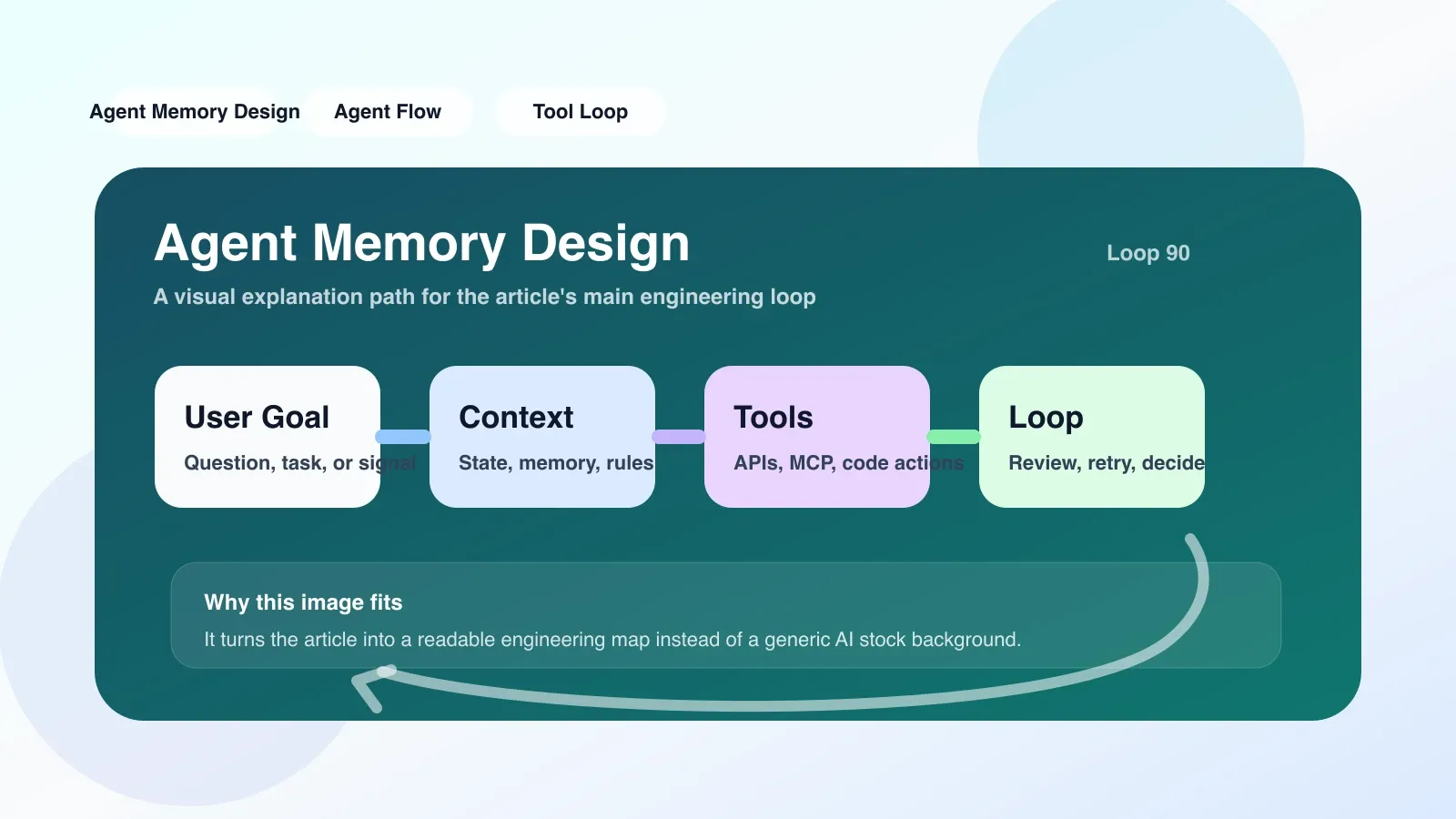
Why Agent Memory Design is currently a buzzword in AI projects
When you try to get an AI Agent to remember user preferences in a single conversation, advance multiple rounds of tasks, or maintain contextual consistency across multiple runs, memory design becomes an indispensable infrastructure. In the past six months, with the emergence of large context window models like GPT-4-32k and Claude 100k, many mistakenly believe that "if the context is large enough, external memory is unnecessary." However, in actual engineering, the input cost of tens of thousands of tokens, retrieval noise, and the limits of single sessions make external memory a rigid requirement for Agent implementation.
What exactly does it solve: starting with a real refactoring
Earlier this year, when I was building a code review agent for internal tools, I needed the agent to keep a memory of the project's style among multiple PR comments. At first, I used the full conversation history: each request was made by piecing the first 5 rounds of exchange, but token consumption surged fourfold, and the agent was often disrupted by irrelevant history, misjudging current opinions. After switching to memory design, I only kept the key memories: the user's code style preferences, common error types, and the last change resolution. As a result, token overhead dropped by 70%, and decision-making consistency actually improved.
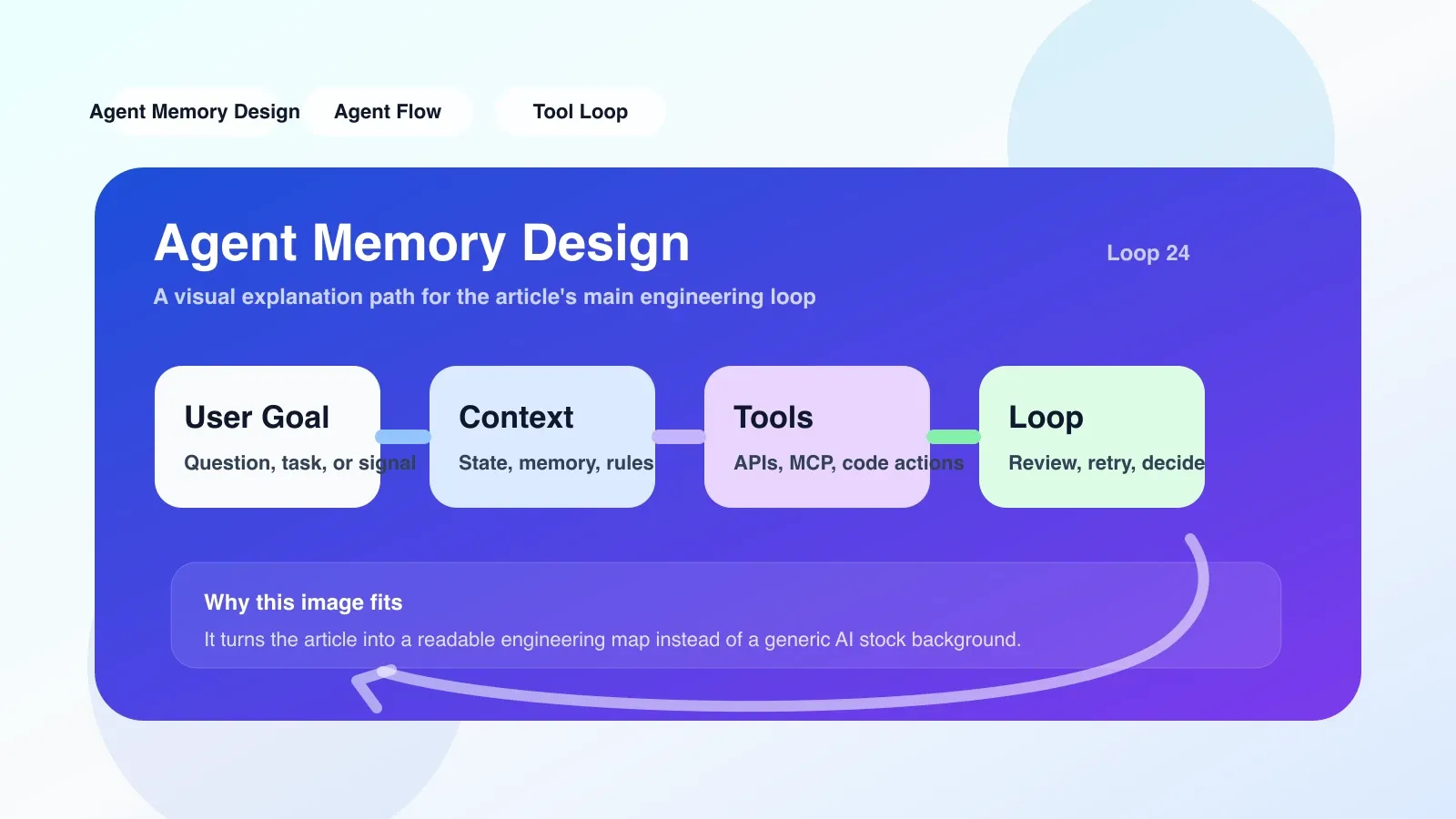
The Most Easily Failed Spot: Three Classic Traps
1. See the trees but not the forest: Treat memory design as a prompt with a paragraph
Many developers write a segment in the system prompt to "record user preferences," then rely on the model to decide which information needs to be remembered. This is a common failure scenario. Models are not inherently capable of distinguishing between "important information" and "casual chatting." In a Q&A assistant project, the Agent mistakenly treated a user's "I hate blue UI" as a temporary emotion rather than a long-term preference, causing subsequent interactions to continuously avoid blue schemes. The correct approach is to introduce explicit memory prioritization and expiration strategies.
2. Loss of control: Retrieve amplified costs
When more than a few hundred entries are remembered, a single search may trigger dozens of vector matches, resulting in thousands of extra tokens added per Agent call. Especially in real-time conversation scenarios, users get annoyed if they wait more than 3 seconds. We tested it with a customer service agent: without memory, the average delay was 1.2 seconds, but after adding long-term memory, it soared to 5.8 seconds. Later, we had to streamline memory granularity and add prior screening rules.
3. Boundary Explosion: Forgot to clear expired memories
Many agents continuously write memory at runtime but never clean up. Ultimately, the memory pool is filled with low-quality, repetitive, and even contradictory information. In one personal chat Agent, because the memory tag was incomplete, the agent remembered both "the user requested to reply with encryption last week" and "the user now requests to change to no encryption," resulting in contradictory suggestions each time. Regular cleaning and merging mechanisms are more important than memory writing.
If you want to implement it now, what should you do as the first step?
Don't rush to choose a vector database. The first step is to draw your agent's memory lifecycle: which information comes from user input, and which comes from system events; Which memories should be short-term (a single conversation), and which should be long-term (across sessions); Which can be written automatically, and which requires explicit confirmation. Using a document or whiteboard to clearly define these categories is more important than picking up a tech stack.
Next is choosing a memory model: if your task scenario is highly restricted (such as code review or customer service Q&A), you can consider structured memory (JSON key-value pairs) combined with rule triggering, which is low cost and highly interpretable. If the scene is open and variable (such as personal assistants or collaborative whiteboards), vector memory + semantic retrieval should be considered. Be sure to run a minimum prototype before selecting a model and test memory reading accuracy and latency with real conversational data.
Backup Plan When Memory Design Fails
Memory design is not a silver bullet. When your agent is in a high-noise, high-real-time, or low-resource environment, you can consider the following alternatives:
- Full Context: Suitable for scenarios where a single session is long but the conversation has few turns (≤ 5 turns), using the model context window directly.
- Agent Without Memory Rules**: If a task can be broken down into atomic steps with each step independently decided, no external memory is needed. For example, an agent that only translates translates the current paragraph independently each time.
- Hybrid Mode: Inserts memories only at critical decision points, using stateless calls for other steps, which is the most cost-effective solution.
Next step: Systematic advancement
If you've already built your first memory prototype but find it's still far from production—for example, how to merge memory conflicts, how to decay memory priorities, how to share memories across multiple agents—these more complex topics require a systematic learning path. I have compiled a systematic course covering complete engineering practices from basic memory structures to distributed memory collaboration, helping developers truly implement Agent memory systems.
No comments yet. Be the first to share your thoughts.