
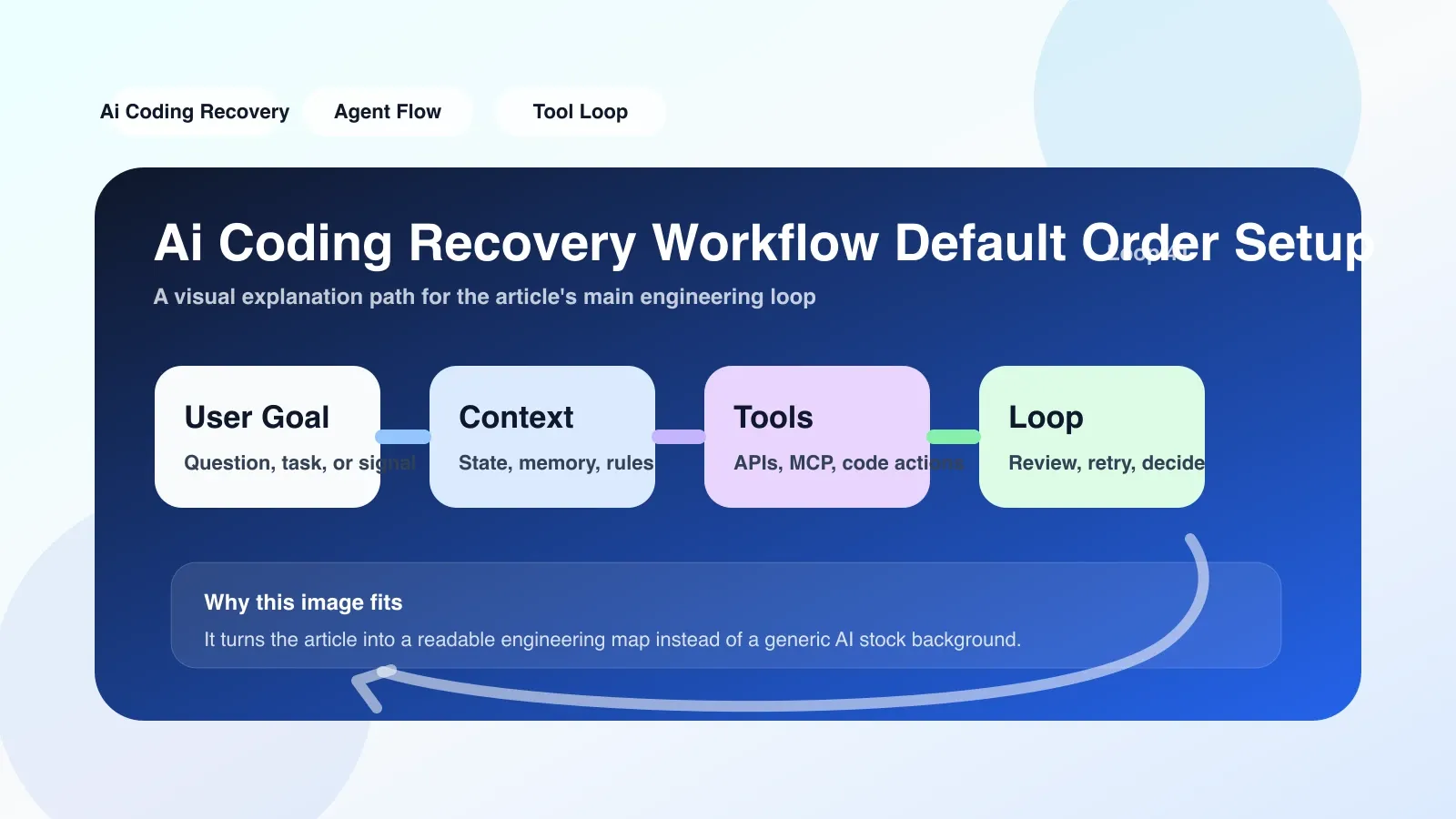
Two recovery sequences solve the same problem
AI During encoding, the model may output invalid code, hallucinate errors, or deviate from context. Recovery workflow is to define how the system automatically recovers when the generated results are unavailable - whether to retry, rollback, or switch to an alternate model.
The core contradiction is: The recovery sequence determines the balance between cost and success rate. Default order usually follows the "light first, then heavy" principle: first retry the current request, then check the context integrity, then try to simplify the prompt, and finally roll back to the previous stable state. The Responses API recovery order is OpenAI Responses API. The recommended recovery path is to first verify the response structure, then use the API's built-in fallback mechanism (such as the fallback parameter), and finally trigger an external rollback.
Which one is suitable for your team?
Default order is suitable for the following scenarios:
- The team uses local or self-built AI coding tools (such as Continue.dev, CodeGPT, etc.) to customize recovery logic
- The coding workflow contains multi-step agent calls (such as code generation → inspection → debugging), and each step may fail
- You care more about flexibility and customizability and are willing to spend time debugging the recovery sequence
Responses API recovery order is suitable for the following scenarios:
- The team has connected or plans to connect to OpenAI Responses API (compatible with Chat Completions)
- Need to reduce the maintenance cost of recovery logic and utilize built-in API functions
- The workflow is relatively simple: single build → check → accept/reject, no complicated rollback status required
Real scenario: a failed recovery case
Xiao Zhang's team built a code review agent using Default order. When the code generated by the model has syntax errors, the default recovery process is: retry three times, and if it fails, roll back to the last code that passed the review.
One day, 5 times in a row, the model generated an API call that contained a non-existent API call, but with correct syntax. The default sequence of "retry" and "rollback" are not triggered (because the syntax detection passes), causing the buggy code to be merged into the main branch. The team didn't discover the problem until the CI failed.
This case exposes a blind spot of Default order: **Retry and rollback only deal with explicit errors (such as syntax errors, timeouts), and have no effect on semantic errors. ** Later they improved the recovery logic: adding a "semantic consistency check" before retrying - using another model to quickly verify whether the generated code is reasonable in the business context.
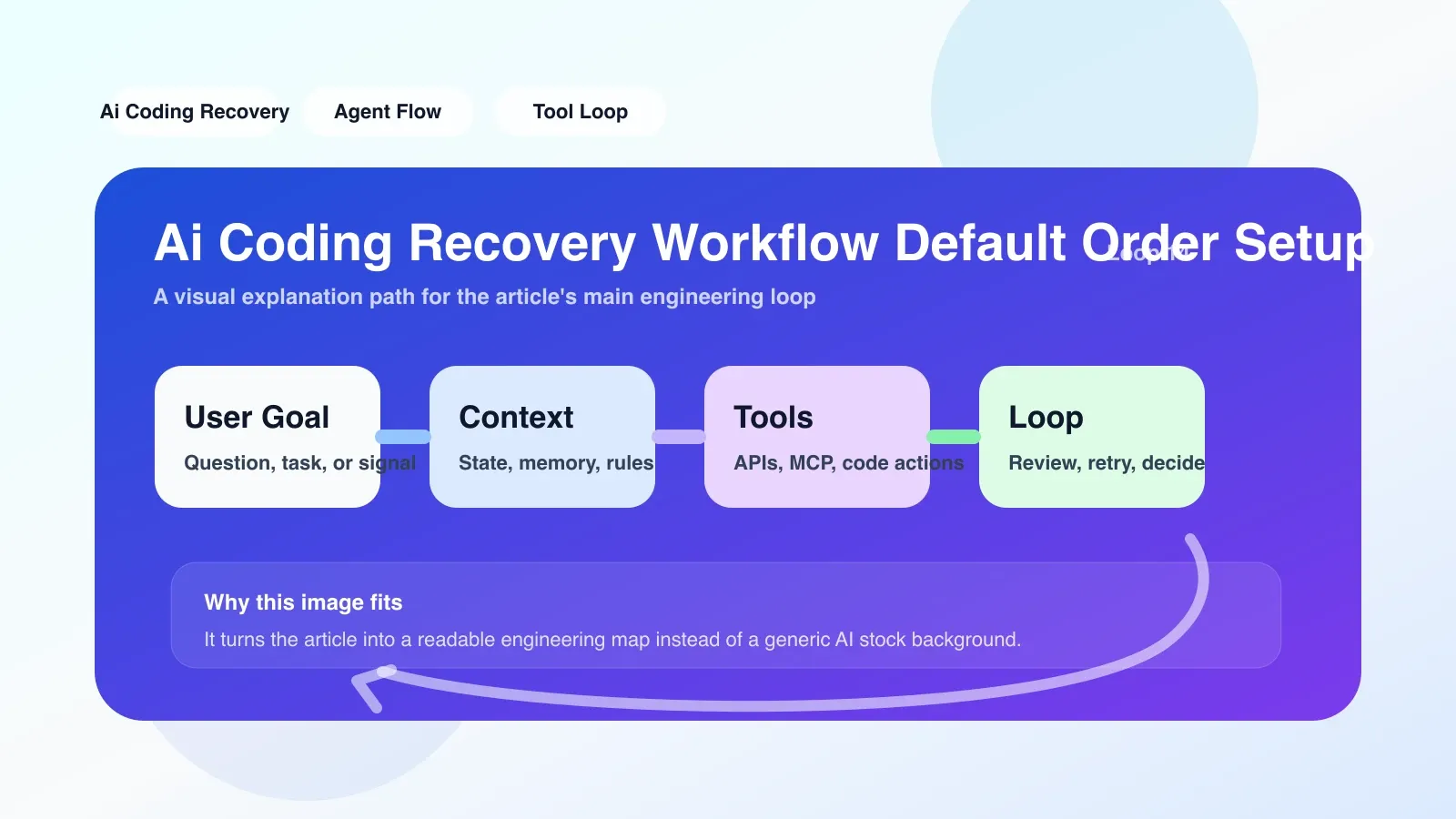
Comparative Dimensions: Decision Making from 4 Perspectives
1. Recovery granularity
- Default order: You can finely control the recovery actions of each step. For example, when a code review fails, only the marked block of code can be regenerated, rather than the entire function. The price is complex logic and the need to maintain a state machine.
- Responses API: The recovery granularity is coarse. The
fallbackparameter of the API allows specifying an alternate model or prompt, but cannot be restored for substeps. If your workflow is a multi-step agent, Responses API may not be flexible enough.
2. Integration with existing tool chains
- Default order: Can be used with any AI encoding tool, but you need to implement the recovery logic yourself. Many open source frameworks (such as LangChain, AutoGPT) provide recovery hooks, but the default order requires you to configure them manually.
- Responses API: Deeply bound to the OpenAI ecosystem. If your toolchain already uses the OpenAI model, the integration cost is low. But if you want to switch models (such as Anthropic, Google), the recovery logic needs to be rewritten.
3. Observability of failure handling
- Default order: You can record the log of each recovery action (number of retries, reasons for rollback, etc.) to facilitate debugging.
- Responses API: The structured response returned by the API contains
finish_reasonand error information, but the recovery internal process (such as fallback switching) is not transparent. This can be a pain point if an audit is required.
4. Performance and Cost
- Default order: Retries and rollbacks will increase latency and token consumption. But you can make targeted optimizations, such as enabling recovery only in steps with high error probability.
- Responses API: The latency of the built-in fallback is lower, but if you trigger the fallback frequently, the cost may be higher (because calling different models may cause token waste).
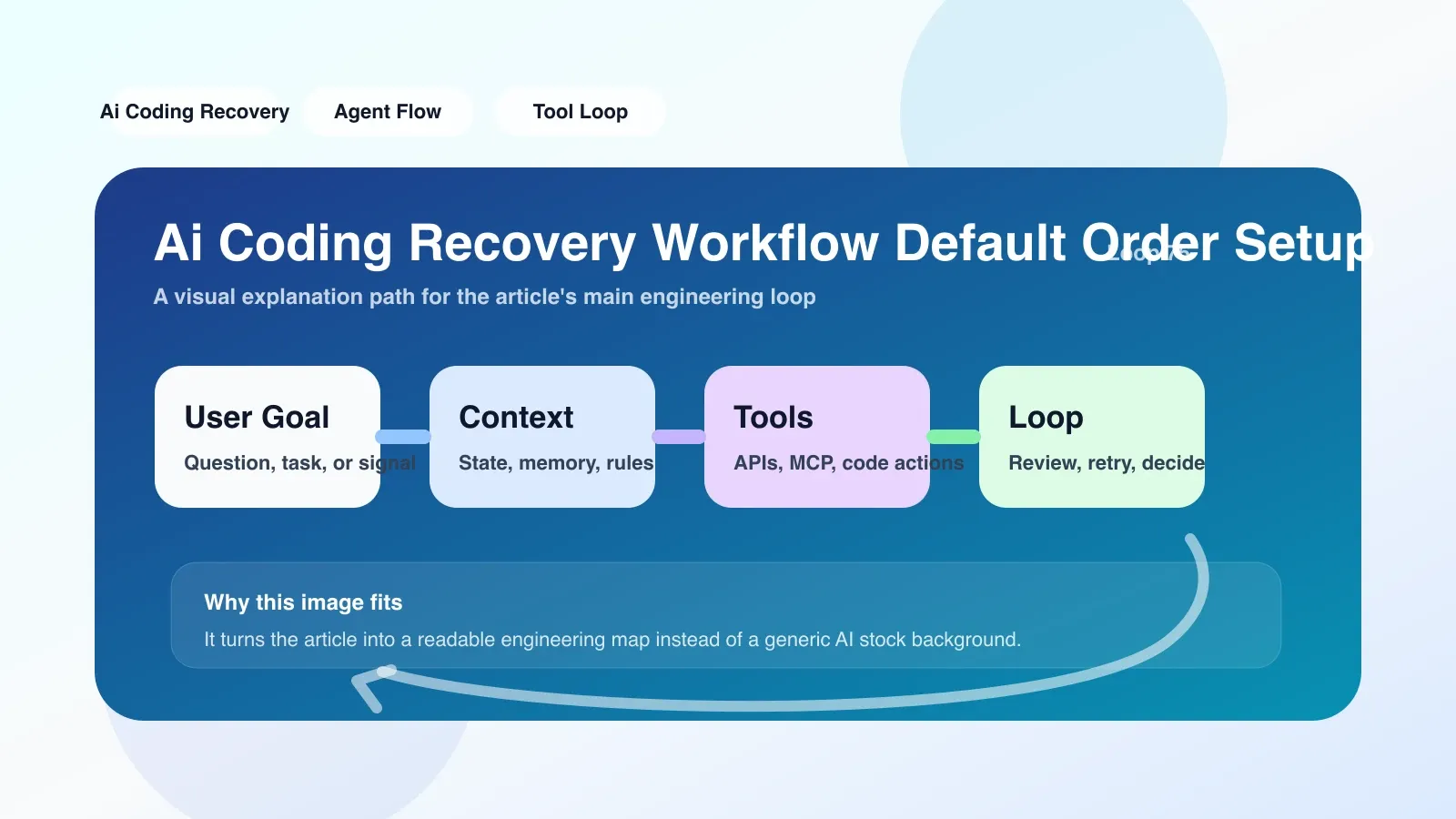
The easiest pitfall: no standard for "successful recovery" is defined
No matter which order you choose, the most common mistake is not clarifying what counts as a "successful recovery".
Example: Your recovery process attempts 5 retries, each time with a slightly different prompt. But the result of the fifth time is still wrong, but it is marked as "success" because the code passed the syntax check. The result is silently bad code.
The correct approach is to set a verification step at each exit of the recovery process (including rollback, fallback success, and retry success) to ensure that the recovery results meet business quality standards. For code generation, at least: syntax checking, type checking, lint rules, compatibility checking with existing code.
Backup plan when both fail
If you have tried Default order and Responses API recovery order, but still encounter frequent recovery failures, then the problem may not be in the recovery order, but in the original prompt design.
Alternate plan:
- Simplify prompt: Reduce the complexity of a single generated task and break large requirements into multiple small steps.
- Added human-in-the-loop: When recovery fails more than 3 times in a row, it will automatically pause and notify the developer of manual intervention.
- Switch model: If the current model performs poorly on a specific type of error, consider changing the model or using an ensemble of different models.
Next step
Your choice depends on your team’s technology stack, workflow complexity, and operations capabilities. If you are pursuing flexibility and controllability, Default order is more suitable; if you want to quickly access and reduce the number of wheels, Responses API recovery order is a more secure starting point.
However, no matter which path you choose, you will need to continuously monitor recovery effects and adjust the sequence based on failure modes. There is no set-and-forget configuration.
No comments yet. Be the first to share your thoughts.