
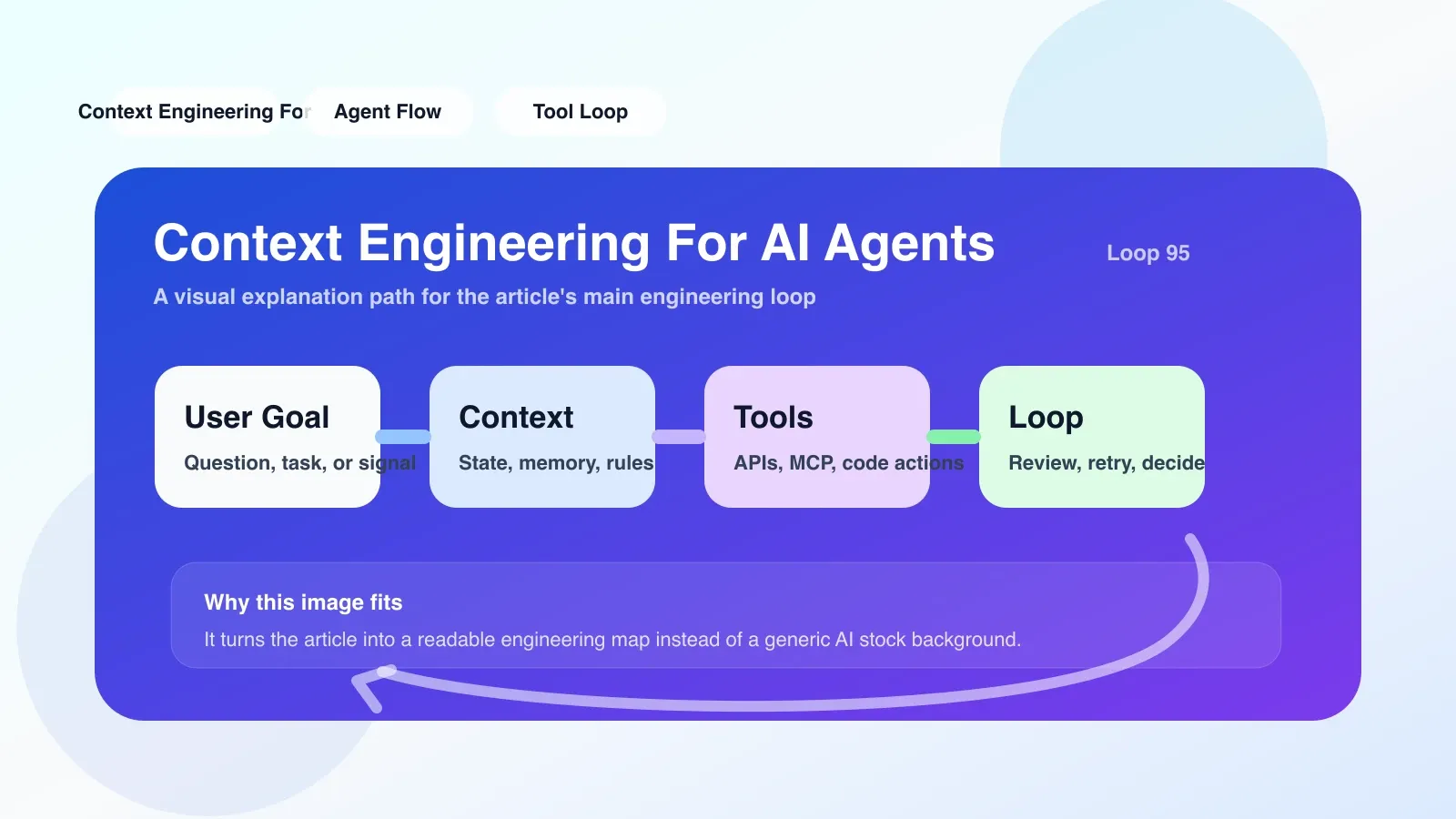
Why Context Engineering has suddenly become a keyword in AI engineering
Since 2024, AI Agent has moved from concept demonstrations to production environments. Developers quickly realized: Model capability is no longer the only bottleneck; how to construct, manage, and deliver context is the core factor determining whether an agent can accomplish complex tasks.
Context Engineering It emerged in response—it is not a single technology, but an engineering methodology dedicated to solving the problem of "delivering the right information, with the right structure, and at the right time to the model."
What problems does it actually solve in real engineering processes?
Suppose you are building a customer service agent that needs to query orders, return and exchange policies, user history, and provide compliant responses.
Without Context Engineering, you might cram all your data into the prompt. The result is either exceeding token limits or the model fails to grasp the key points and gives incorrect answers.
The solution for Context Engineering is:
- Context Clipping: Only retain the most relevant data from the current conversation node (such as the last 3 order records, not all of them).
- Structure First: Formatting data from different sources into a unified schema allows the model to "read" relationships.
- Timing Management: Control context hit timing, for example, order status should not be referenced after a refund is completed.
- Injection Point Control: Instead of resending the entire context in every conversation, selectively inject according to intent.
These operations are usually implemented through a context middlelayer that intercepts model requests and assembles the final context according to rules.
A specific scenario: E-commerce after-sales agent
The user messaged: "I bought my phone yesterday, the screen has dead pixels, I want to return it." ”
- Agent without Context Engineering: may load all of the user's orders from last year, browsing history from a few days ago, and the full general policy at the same time, resulting in missing the key 7th return and exchange policy within the 8k token.
- Agent passing through Context Engineering: The context middle layer first determines intent as "return," then only injects the order details (ID, price, purchase time), terms related to screen dead pixels in the return/exchange policy (FAQ 3), and the latest user address. The model can immediately provide an accurate response: the return conditions are met, and a return order has been generated.
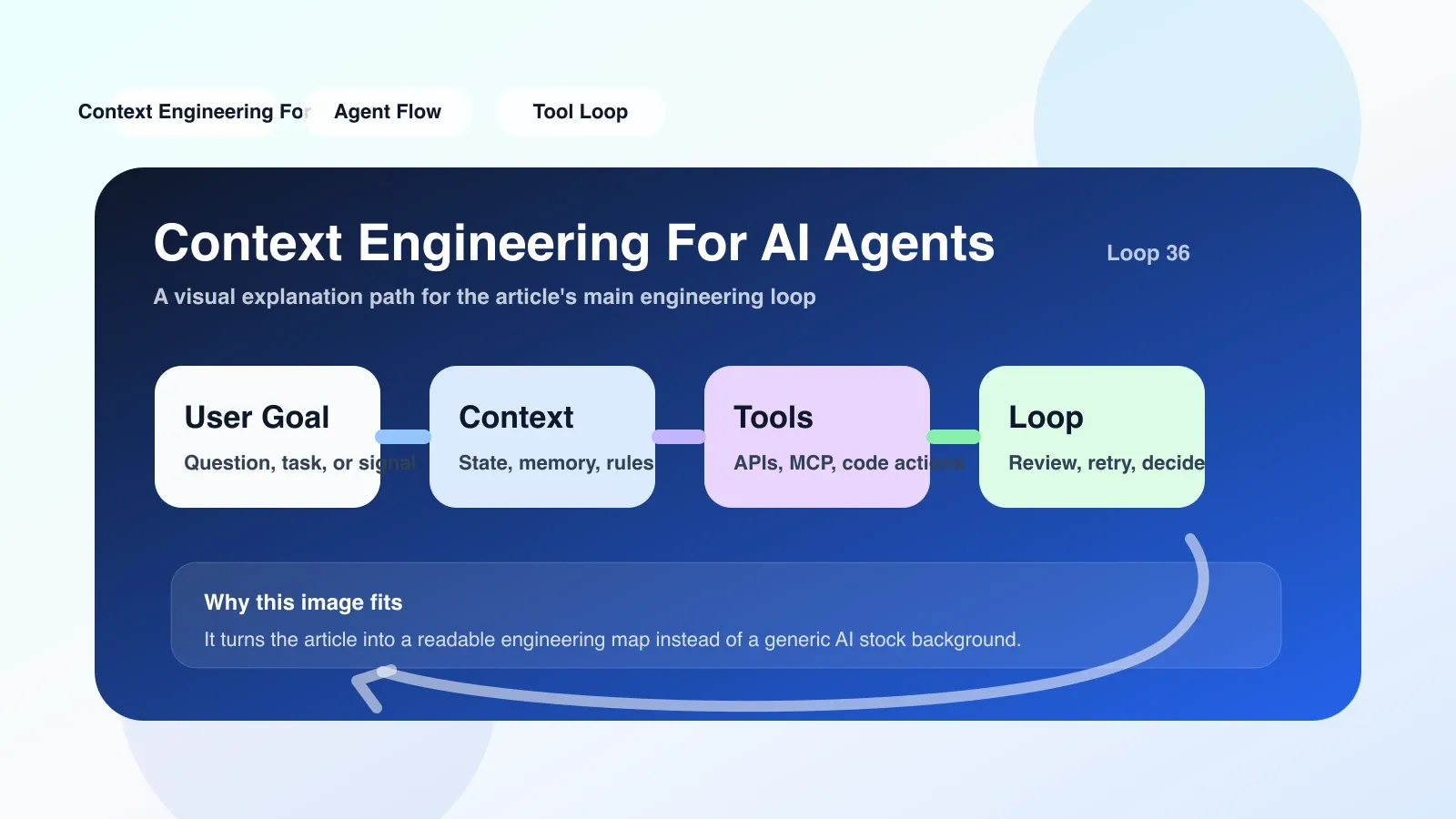
The Most Prone Areas for Failure and Misunderstanding
Failure Scenario 1: Contextual Pollution
The most common problem is context stacking. To avoid missing information, developers place all potentially relevant documents in context. The resulting model "got lost" in 32k chaotic messages, producing hallucinations.
Correct Practice: Score relevance before each injection, keeping only the highest-scoring pieces. You can use simple keyword matching, or vector search + rule filtering.
Failure Scenario 2: Confusion Between Context and Memory
Many people equate Context Engineering with "long-term memory." In fact, Context Engineering is mainly responsible for context construction for the current round, while memory systems (such as vector database storage) are upstream. Confusing the two leads to overly complex design: trying to manage both history and real-time, but failing to do both well.
Correct understanding: Context Engineering is the "middleman," who reads fragments from the memory system, rearranges them according to the current intent, and hands them over to the model.
Failure Scenario 3: Timing Disorder
In multi-turn agent conversations, if the context does not have a time tag, the model may reference an expired state. For example, the user first asks, "Has the order shipped?" After receiving the reply, he asked, "Can I change the address?" If the context does not indicate the time point "shipped," the model may assume the order has not yet shipped, thus giving incorrect guidance.
Solution: Attach timestamps to each context fragment, sort them by time during injection, and give the model explicit timeline instructions.
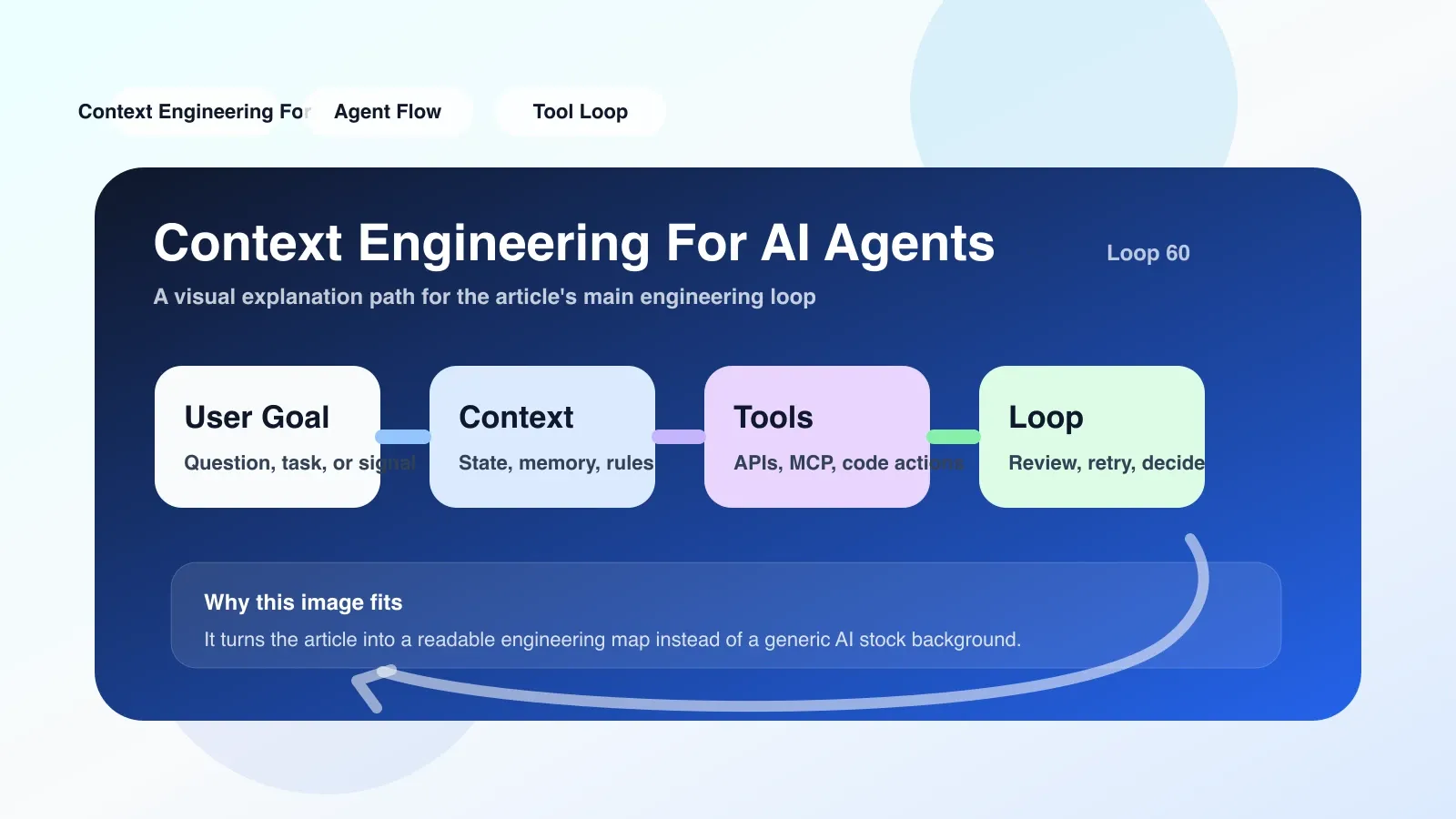
If you want to land now, what should you do first?
- Draw decision points: Organize every intent node in your Agent, listing which data each node depends on and which system it comes from.
- Define Context Schema: Design a fixed structure for each type of data. For example, the order context must include order_id, status, items, and timestamps.
- Write Context Injection Rules: Not all nodes need all fields. For example, "checking logistics" only requires order_id and logistics providers.
- Build a Simple Context Middleware: First, use a Python function or Node.js middleware to assemble JSON blocks according to the rules.
- Add failed rollback: When an error occurs in the middle layer of context, the Agent should output "Temporarily unable to obtain information" instead of continuing inference.
No need to start with complex RAG or vector libraries. Run a node through static rules and then iterate step by step.
Where to Go Next: Continue Systematic Learning
Context Engineering is just part of the Agent project. To fully master Agent construction, you also need to understand loop control, MCP protocols, action planning, and more. Below is a more systematic paid content to help you transition from an ordinary developer to an Agent engineer.
No comments yet. Be the first to share your thoughts.