
First look at which link you are stuck in
When the context in the Agent workflow begins to "drift" - the memory is contaminated, the context is truncated, and the old context that should not be restored is restored when the state is rolled back - you will immediately face a choice: use recovery primer, audit log or rollback?
This is not a theoretical question. I experienced a production accident: a long-running Codex agent's context was contaminated by old branches after 200 rounds of continuous conversations, causing it to repeatedly call the wrong API. At that time, there were great differences within the team: some people advocated using recovery primer to rebuild the context, some insisted on checking the audit log one by one, and some wanted to rollback directly. The result was that every approach was tried, but time and resources were wasted for a week.
First understand what each of the three tools solves
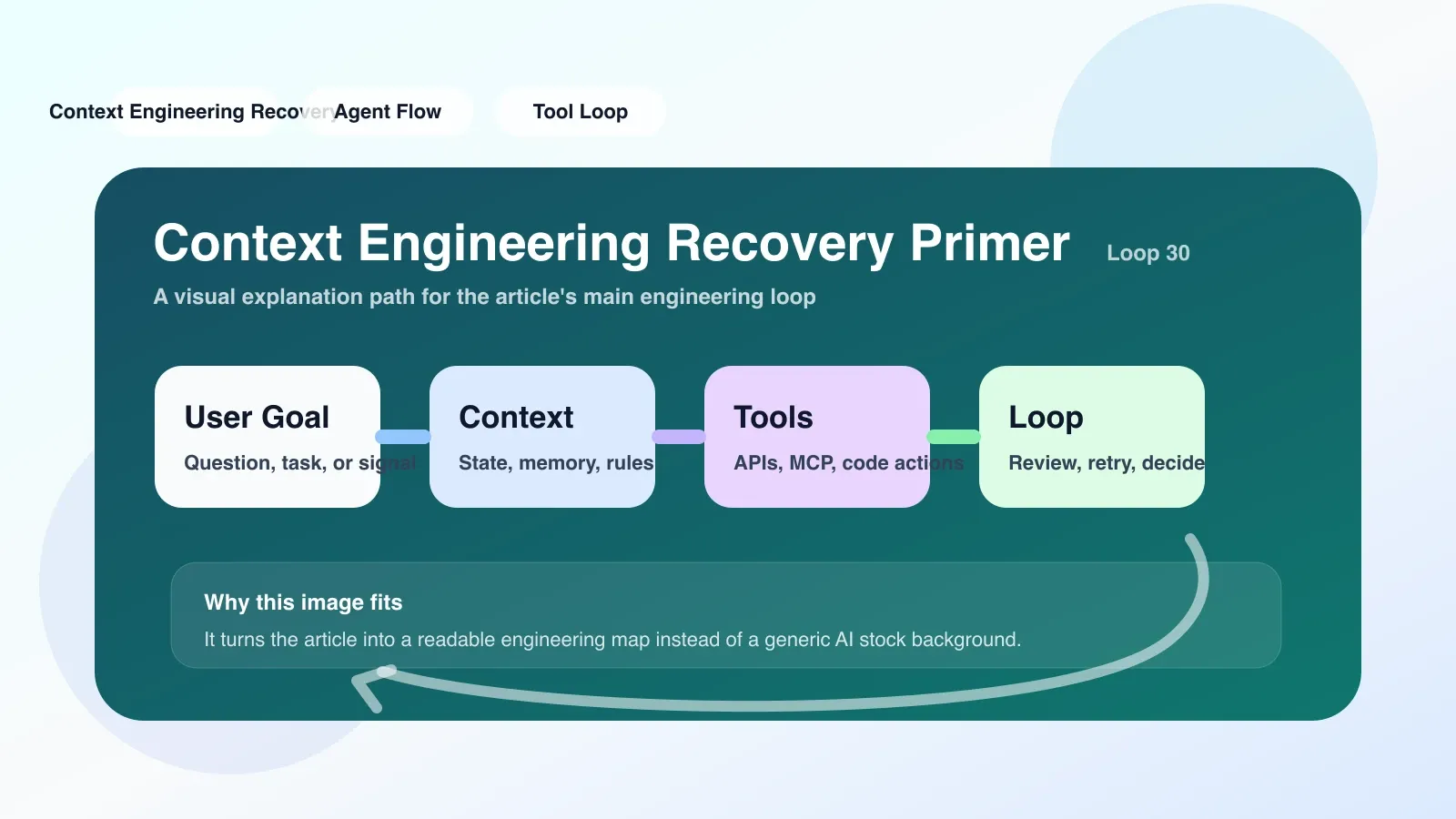
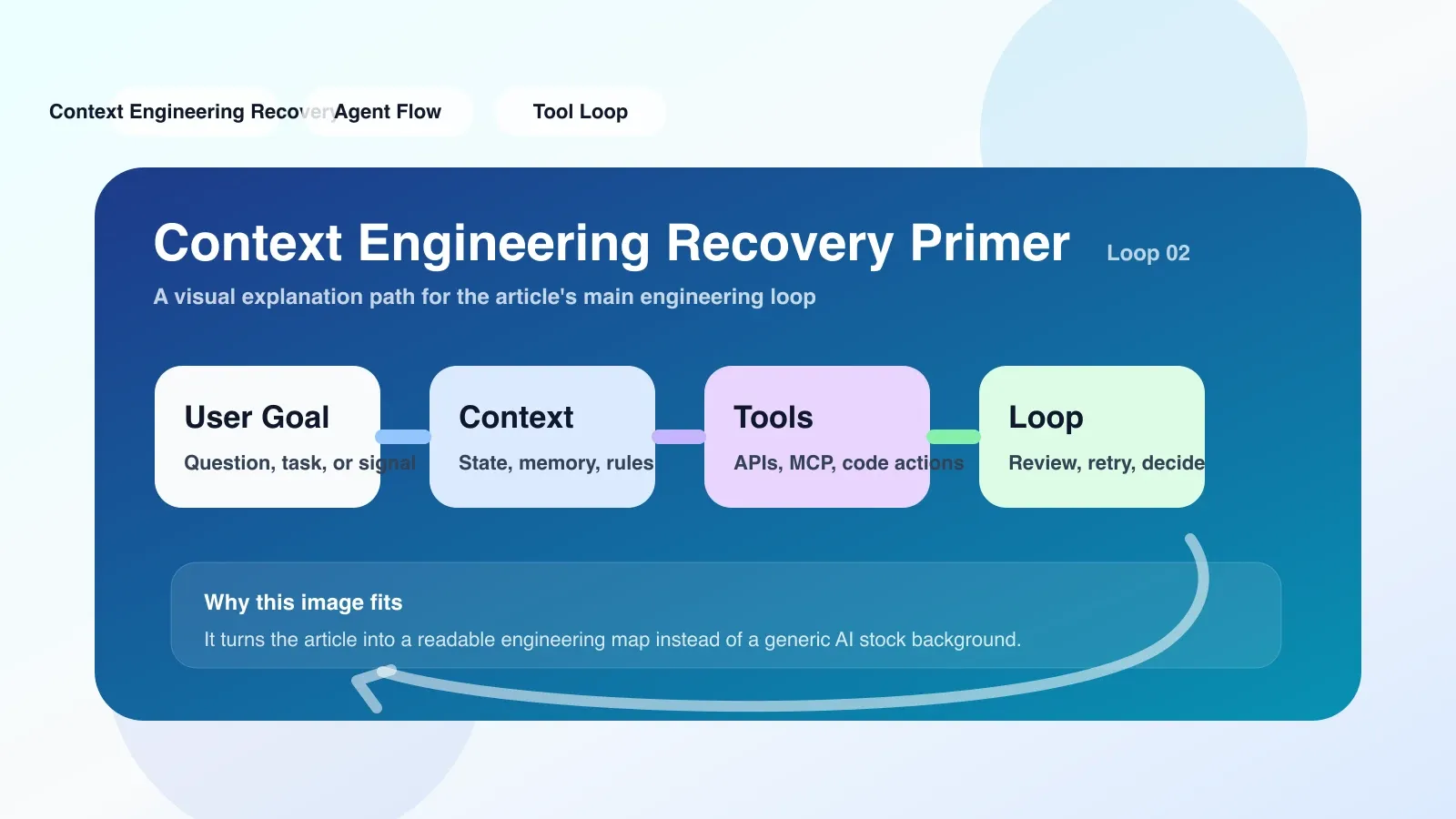
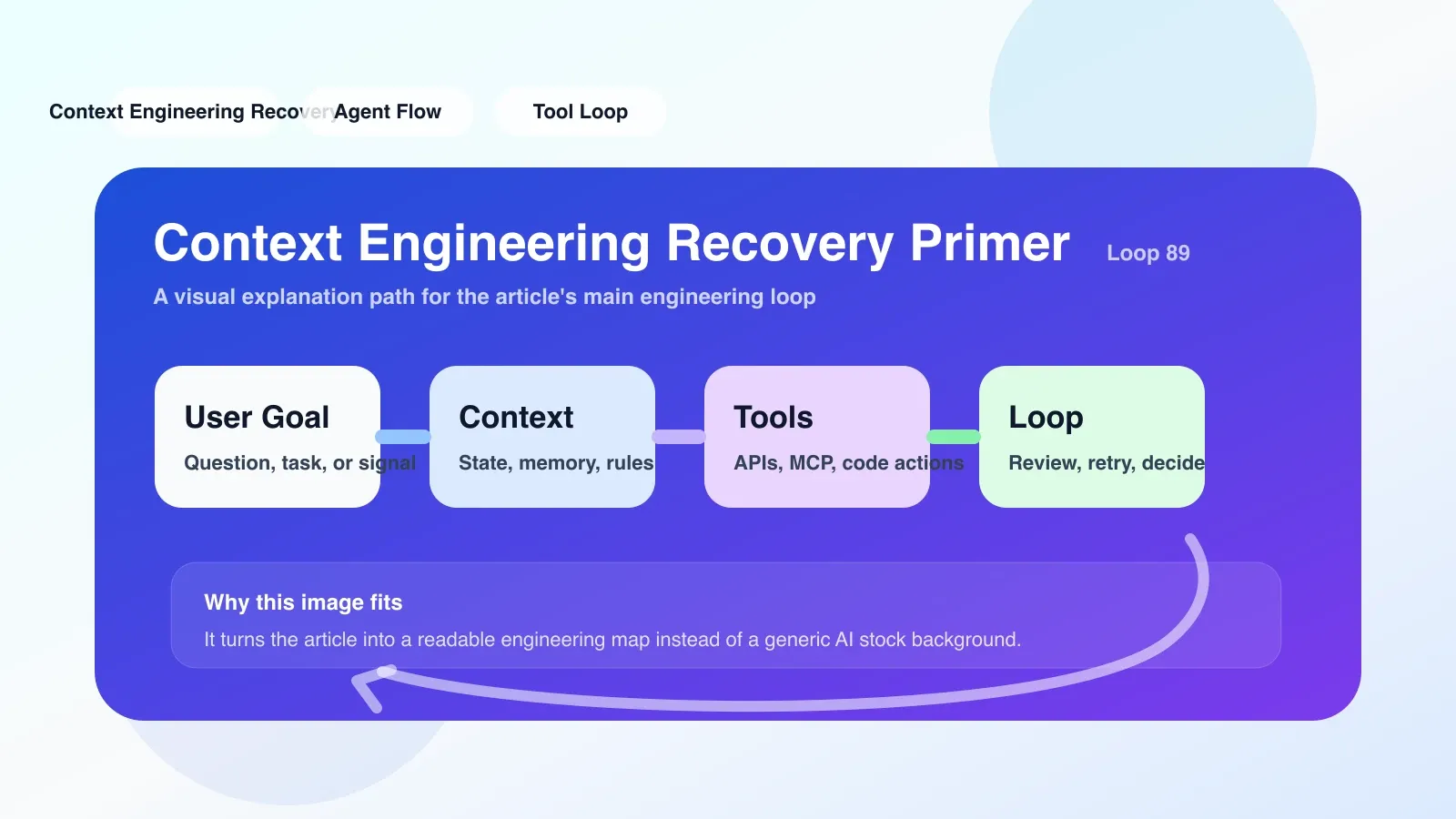
Context Engineering Recovery Primer: This is a preset "contextual recovery blueprint". It defines a set of rules and templates for quickly rebuilding the context after it is damaged or lost. For example, when the agent detects that the context length exceeds a threshold or a key state is missing, the primer injects a clean context template that contains necessary global information and marks the current state as "recovering". The value of Primer is that it is fast and controllable, but its disadvantage is that it does not retain historical details - the restored agent is equivalent to continuing work from the "most recent checkpoint", losing all previous intermediate reasoning.
Agent Workflow Audit Log: This is a complete operation log system. It records input and output, context snapshots, state changes, and timestamps for each step. When a problem occurs, the audit log can accurately play back "which step wrote the error context." Its advantage is precise positioning, but its disadvantage is that query and analysis costs are high - especially in I/O-intensive or long-running tasks, the log itself may become a performance bottleneck.
Rollback: This is the most direct but crude way. Restore the overall state of the agent (including memory, context, and task queue) to a known stable snapshot. The difficulty with Rollback is that the "snapshot boundary" is difficult to define: should you roll back to 5 minutes ago, or 3 hours ago? If you roll back, do you have to redo the operations that were performed correctly?
The easiest pitfall: choosing the wrong tool is a waste of effort
The most likely failure point is: You use Primer for auditing and rollback as a regular recovery method.
Real case: Every time an agent doing code review makes an error, the team directly rolls back to the context before the previous git commit. The result? They found that the agent frequently lost approved code review comments, and developers had to manually resubmit reviews. The root of the problem is: rollback also rolls back the correct approval status, but those approvals are not submitted to the external system, resulting in permanent loss.
What is the correct approach? Locate the problem type first: If the context is "incomplete" rather than "error", it is more appropriate to rebuild it with primer; if the context is "polluted by error information" and the source of pollution needs to be traced, the audit log is the only option; if the context is completely unavailable and the scope of the impact is controllable, rollback is used as a last resort.
Decision matrix in three scenarios
| Scenarios | Recommended tools | Reasons | Limitations |
|---|---|---|---|
| Agent's continuous dialogue reaches 200 rounds, and the context is randomly truncated | Recovery Primer | Quickly rebuilds a clean context, losing some intermediate reasoning but within an acceptable range | Unable to locate the cause of truncation |
| The results of two executions of the same agent are inconsistent, and it is suspected that the context has been injected incorrectly | Audit Log | Trace the input and output of each step to locate the source of pollution | Requires support from the log system, and the query is time-consuming |
| The Agent begins to generate completely irrelevant nonsense, and cannot be quickly located through logs | Rollback | Completely returning to a known stable state is the safest way | The correct work results may be lost, and external status checks need to be cooperated |
Note that many actual failures are mixed: for example, "context is contaminated" causing the agent to behave abnormally, and the problem reappears after you rollback because the source of the contamination is still in the environment. At this time, audit log is the fundamental solution.
Three executable practices
1. Assess your agent’s tolerance for “intermediate reasoning loss”
If your agent builds code step by step (for example, Codex is generated file by file), and the cost of restarting after intermediate reasoning is lost is high, then primer is not suitable for you. You should rather use audit logs + incremental recovery: reconstruct the most recent inference path from the logs.
2. Set external confirmation points for key operations
The biggest pitfall of Rollback is that the internal state is rolled back but external operations (such as sending emails, submitting PRs) are not rolled back synchronously. The solution is to create an external snapshot before each operation that affects the external system (such as database logging or file submission). When rolling back, first compare the external snapshot and the internal state. Only operations that have not taken effect externally are allowed to be rolled back.
3. Establish a “recovery drill” mechanism
Don’t wait until a production accident occurs to figure out what to do. Choose a test agent every week, deliberately create context pollution, and then practice recovery using three methods, recording the time and results. You'll quickly figure out the marginal cost of each tool.
When should I use which one? a decision flow chart
问题出现
  ├─ context 仅不完整(长度超限、关键缺失)? → Recovery Primer
  ├─ context 明显被错误信息覆盖?
  │    ├─ 能定位污染源? → Audit Log → 修复污染源 + 局部恢复
  │    └─ 无法定位? → Rollback(配合外部状态检查)
  └─ agent 行为完全失控? → Rollback 后审计日志追查根因
Summary: There is no silver bullet, but you can avoid common failures
The main reason for choosing the wrong recovery strategy is that there is no precise classification of "fault types". It is recommended that the team customize the "recovery strategy priority table" according to the business before the agent goes online, and write it into the agent's exception handling pipeline.
If your agent architecture involves multiple steps, external I/O, or long-term operations, it is strongly recommended to use audit logs and rolling snapshots as infrastructure - not as a post-mortem.
Next, do you want to delve into more practices of agent stability? You can take a look at our system courses.
No comments yet. Be the first to share your thoughts.