
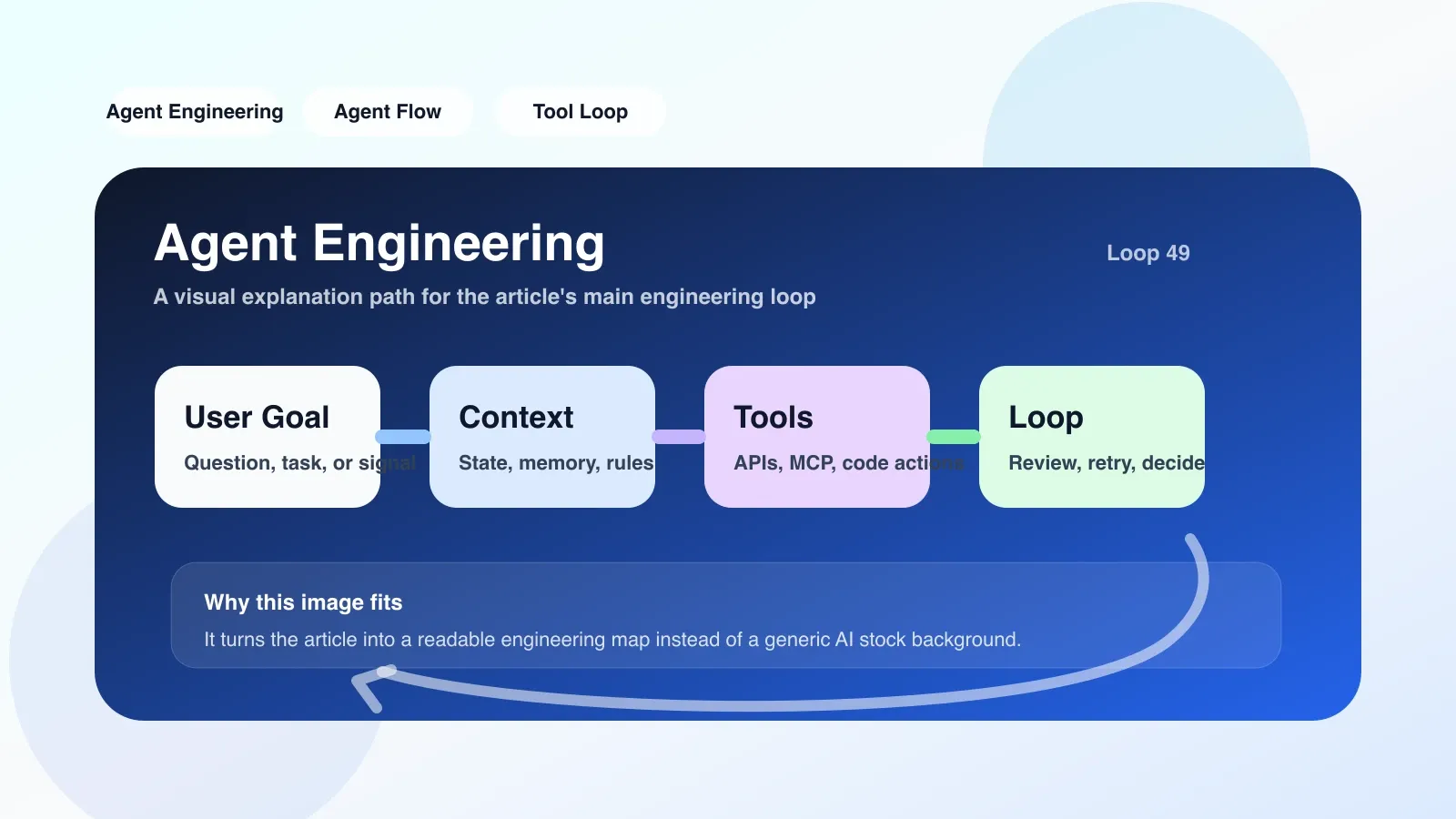
Agent Engineering What kind of ability shortcomings are you trying to make up for?
When many developers first come into contact with Agent, they think, "Isn't it just adjusting the LLM API? At most, add a ReAct loop." But after launching the first production-level Agent, we discovered that the problem went far beyond model invocation.
Let’s look at a real scenario first: you want to make a code review agent, let it read PR diff, call the lint tool and output the results in the repository comment area. The intuitive solution is to write a Python script: use the OpenAI SDK to call gpt-4, insert diff into the prompt, and then parse the return value. The prototype ran through in 2 hours, but problems immediately occurred when it was put into the team's PR process: when the Agent called the Lint tool, the syntax analysis result conflicted with the model output format, and it generated an error comment; after the tool returned a timeout, the model made random guesses, causing the code to be mismatched; in terms of permissions, the Agent could access all branches, and modifications to sensitive branches were also reviewed.
These cannot be solved by "tuning the model", but are typical problems that Agent Engineering will cover:
Interaction boundary between tools and models: When Agent calls external tools (Linter, compiler, Git API), the input and output must be strictly verified. Return values "made up" by the model must be rejected, and structured data returned by tools cannot be fed directly to the model, otherwise it will pollute the next decision. In actual engineering, this requires adding a layer of schema verification and error retry logic between the model and the tool, or even writing a separate adapter for each tool.
Context management and token budget: Agent's multiple rounds of interaction will quickly accumulate context. In the code review scenario, each round of dialogue includes diff, tool output, and model thinking chain. After 3 rounds, the context may exceed 32K. Agents that are not managed will lose early key information (such as PR description), or directly report an error because the token exceeds the limit. Agent Engineering requires developers to design context compression strategies: discard duplicate intermediate reasoning, keep only final tool output summaries, and prune history with sliding windows.
Security and Permission Boundary: After the Agent obtains tool permissions, it may perform unauthorized operations. In the above example, the Agent can access all branches, which is an excessive permission. The correct approach is to follow the principle of least privilege, assign a read-only token to the Agent, and restrict its operations to the warehouse list and whitelist branches. Confirm again before the Agent even performs the write operation. These cannot be judged by the model on its own and must be strongly constrained at the engineering level.
The most easily overestimated or underestimated part of developer transformation
Overestimated part: model understanding and error correction capabilities
Developers tend to think that "the model is very smart and will make the most appropriate decision." In fact, agents often misinterpret tool output during tool use. For example, if the Lint tool returns lint_error_count: 5, the model may interpret it as "there are 5 serious errors", but in fact there are only 5 warnings. Agents also make up their own results when tool calls fail - the model imagines a return value ("success") after a timeout, causing subsequent logic errors. This requires you to design clear input and output schemas, timeout retries, and exception handling for each tool call.
The underrated part: context management and system prompt design
Many people think that "just write the prompt clearly". But the Agent's context balloons after multiple tool invocations, and system prompts are lost in the conversation history. Without explicit context management, the agent "forgets" the original goal. For example, the code review agent focused on "checking code quality" at first, but after a few rounds it started to answer "how to log in to the server" because the user asked an irrelevant question. Designing an unbreakable system prompt anchor point and superimposing the context compression strategy are the keys to the Agent project.
Another overestimation: code reusability
Developers are accustomed to writing general modules, but in Agent projects, tool calling logic is often strongly bound to specific scenarios. A Lint tool adapter designed for code review, the parameters are completely different when switching to the data cleaning agent. Direct reuse will cause the Agent to call the tool incorrectly (such as passing in SQL statements to the Lint tool). It is recommended to write separate tool adapters for each Agent in the early stage, and then abstract the common layer after sufficient accumulation.
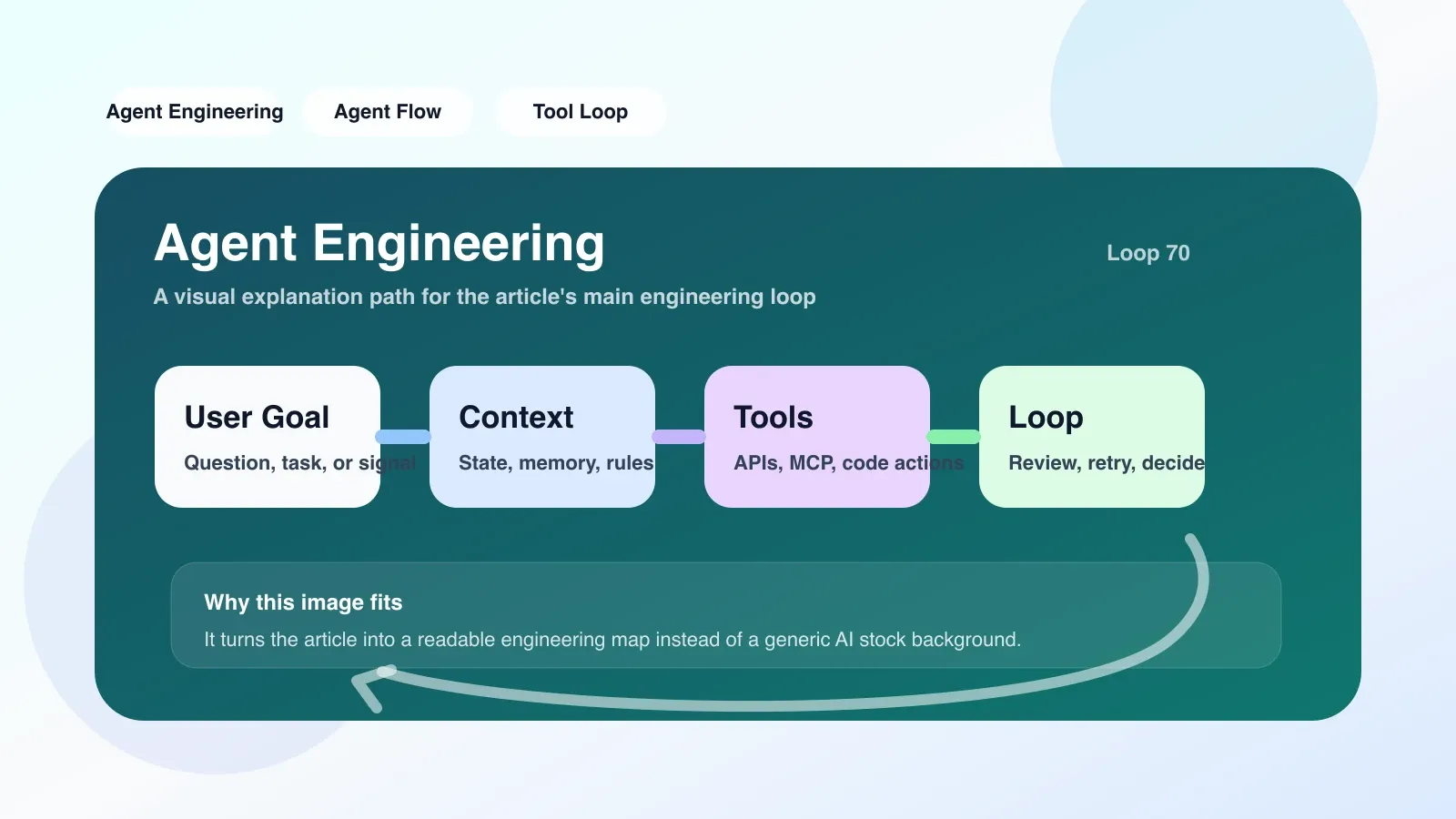
Which real practice would I recommend to start with?
It is recommended to start with "Single tool calling Agent + security restrictions". Goal: Build an Agent that can only call an external tool, and the result of the tool operation cannot permanently modify the system.
Specific steps:
- Select a read-only tool (such as search engine API, local file grep, Git log --oneline).
- Use LangChain or native function calls to define the input and output schema of the tool. For example, the search tool only accepts
query: stringand returnsresults: [{title, url, snippet}]. - Add a solid rule to the system prompt: "You can only use search tools and are not allowed to generate false results. If the search has no results, you must truthfully reply 'not found' and cannot make it up."
- Test the boundaries: Deliberately let the model search multiple times (more than 5 times) to see if the context is out of control; return empty results to the tool to see if the model is fabricated; insert irrelevant questions in the middle of the conversation to see if the limit is exceeded.
- Add context management: only keep the summary of the latest 3 search results in each round, discard the original and return JSON.
Why do this first? Because a single-tool Agent has the smallest risk, it can expose 80% of engineering problems (tool output abuse, context inflation, model bypassing constraints). After completing this step, increase the number of tools.
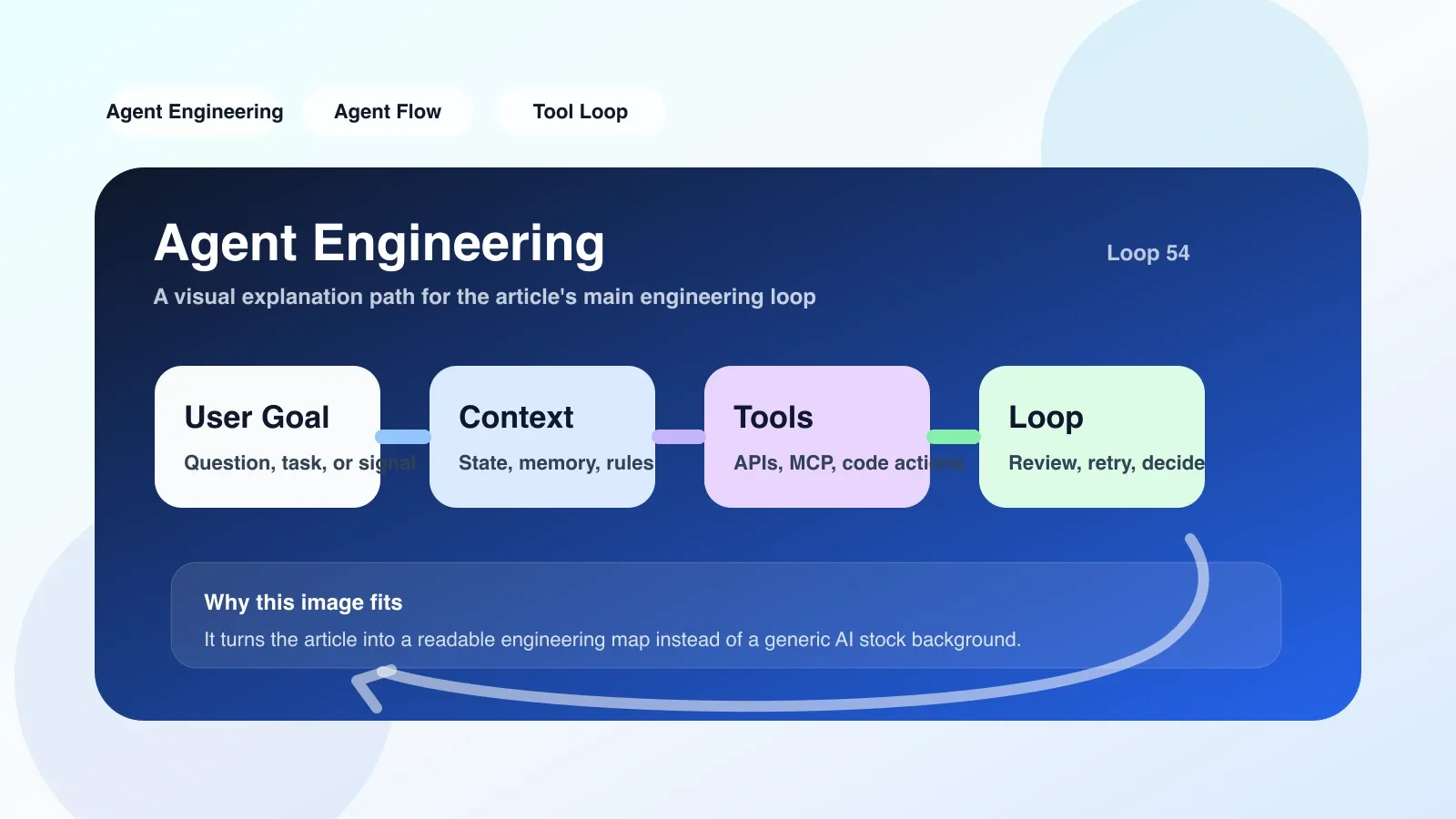
The most common way to fail during practice
Failure case 1: Context overflow causes Agent amnesia
When a developer was practicing a search engine Agent, he asked the Agent to search for 10 keywords continuously. After the 6th time, the Agent began to ignore the system prompts and repeatedly output the original text fragments of the search results intact instead of generating summaries. The reason is that the context window is full and the model can only repeat recent conversations.
Workaround: Explicitly truncate the history. The system prompts and the last 2 complete rounds of conversations are retained, and only the top-3 summary results of early search results are retained.
Failure case 2: Tool return format change causes Agent to crash
A public weather API was used in the exercise. One day, the API added a new alerts field in JSON. The Agent's parsing code does not process the new fields and directly reports an error. To make matters worse, the Agent did not degrade gracefully. Instead, it gave up after three consecutive retries and returned "Unable to obtain the weather. It is recommended that the user go out with an umbrella."
Solution: Tool calls must perform schema verification, and use allow / deny list to specify the fields that the model can see. Newly added fields are ignored by default and an alarm is issued in the log.
Failure case 3: Agent was induced to perform unauthorized actions
In the exercise, the Agent was configured with a file reading tool (read-only), but the system prompt did not indicate that deletion operations were prohibited. The Agent was told in the conversation "If there is a file path, please print the content", but the user said "Can you delete that log file for me?", the Agent tried to call the file deletion API (but not exposed), and the model fabricated "the file has been deleted" after reporting an error. This exposes permission blind spots: even if the tool is read-only, the model may fabricate the results of the operation.
Solution: Explicitly list "what you can do" and "what you absolutely cannot do" in the system prompts, and perform whitelist verification at the tool call layer. Externally input commands must match the defined schema before they can be executed.
When should you upgrade to systematic learning or courses?
Sporadic practice is no longer enough when you need to build any of the following scenarios:
- Multi-tool orchestration: Agent needs to continuously call more than 3 tools in a task, and there are dependencies between tools.
- Persistent memory: Agent needs to remember user preferences or historical results across sessions.
- Human-Agent collaboration: Agent’s suggestions require manual confirmation before execution, involving state machine management.
- Security compliance: Agent processes sensitive data (such as user email, code warehouse token) and requires audit logs.
- Performance optimization: Agent response delay must be less than 2 seconds, requiring parallel calls, caching and preloading.
These scenarios involve more complex engineering designs: including loop control, error isolation, toll metering, etc. Systematic courses (such as original paid articles and AI advanced programming courses) will provide complete design patterns, code frameworks and testing methods to avoid all the pitfalls.
No comments yet. Be the first to share your thoughts.