
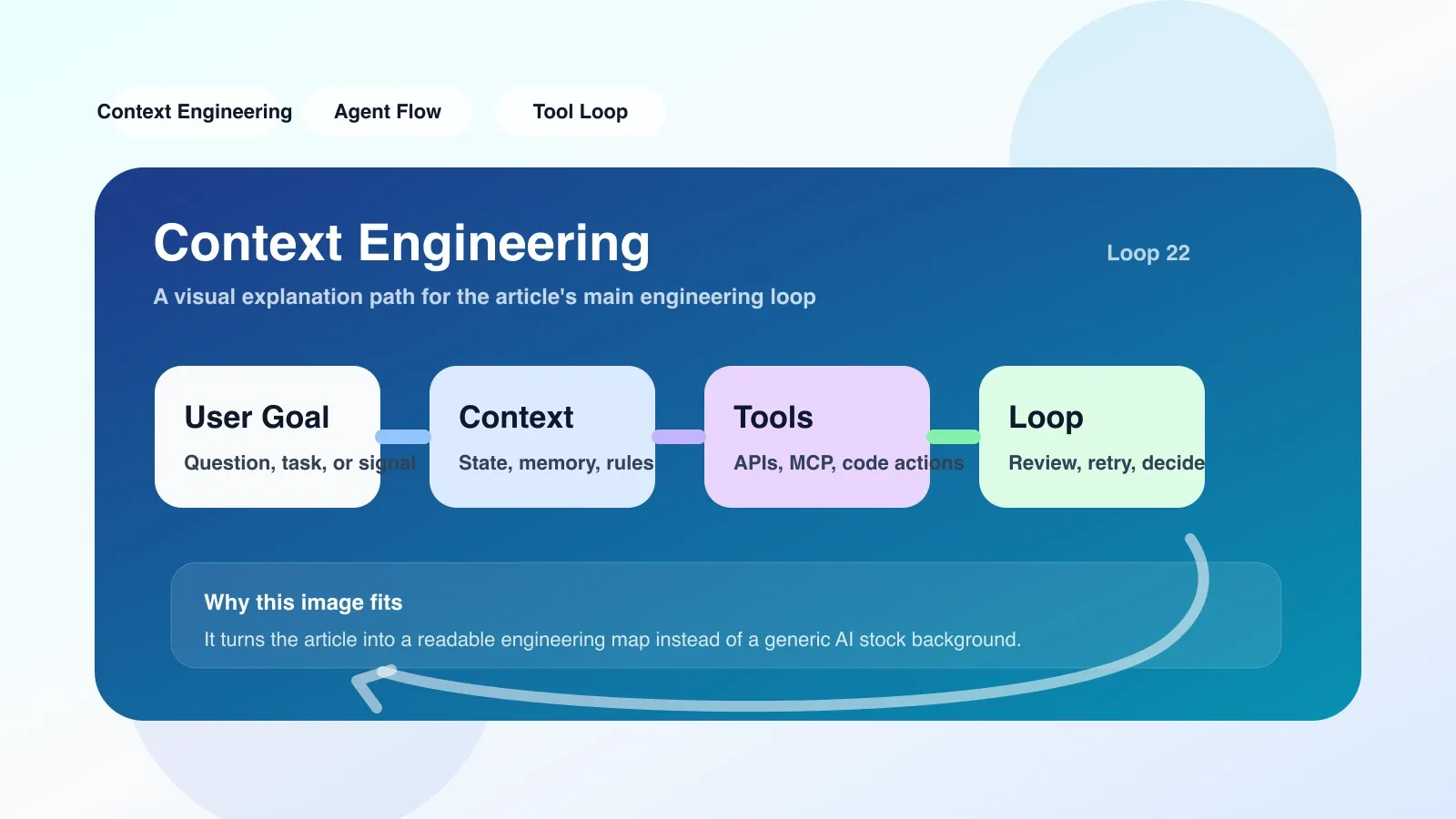
The problem you encountered: I wrote a lot of APIs, but I couldn’t make an Agent that can make decisions independently.
Many developers have this experience: they can skillfully call OpenAI and Claude's API, splicing few-shot and function calling, but the generated Agent is always "sluggish" - either misunderstanding the context, or getting lost in complex multi-step tasks.
The problem is not with coding capabilities, but with Context Engineering (contextual engineering). It is the "operating system" of the Agent project, which determines whether the Agent can accurately understand the current scene, remember key information and make reasonable decisions.
Context Engineering What kind of Agent engineering capability shortcomings are you trying to make up for?
When most developers build Agents, they are used to focusing on prompt templates and API parameters. But the Agent's workflow is far more complex than a single call:
- State management shortcomings: Agent needs to maintain multiple rounds of conversation history, tool call results and external data. Context Engineering teaches you how to design a context schema—use structured JSON or an in-memory database to organize context instead of cramming everything into the prompt.
- Retrieval and Injection Shortcomings: When the Agent needs to read the database or document in real time, Context Engineering defines how to accurately extract relevant information from the vector library, SQL or logs and inject it into the current session.
- Decision boundary shortcomings: Agent often talks nonsense due to overflow or lack of context. Context Engineering Limit the Agent's reasoning within the appropriate scope by setting the context window and priority rules.
Take an e-commerce customer service Agent as an example: without Context Engineering, the Agent can only see the current user's messages; if there is, it can combine the user's historical orders, return strategies and inventory status to proactively determine "Is this user worthy of a VIP discount?" - This is the problem that the Agent project wants to solve.
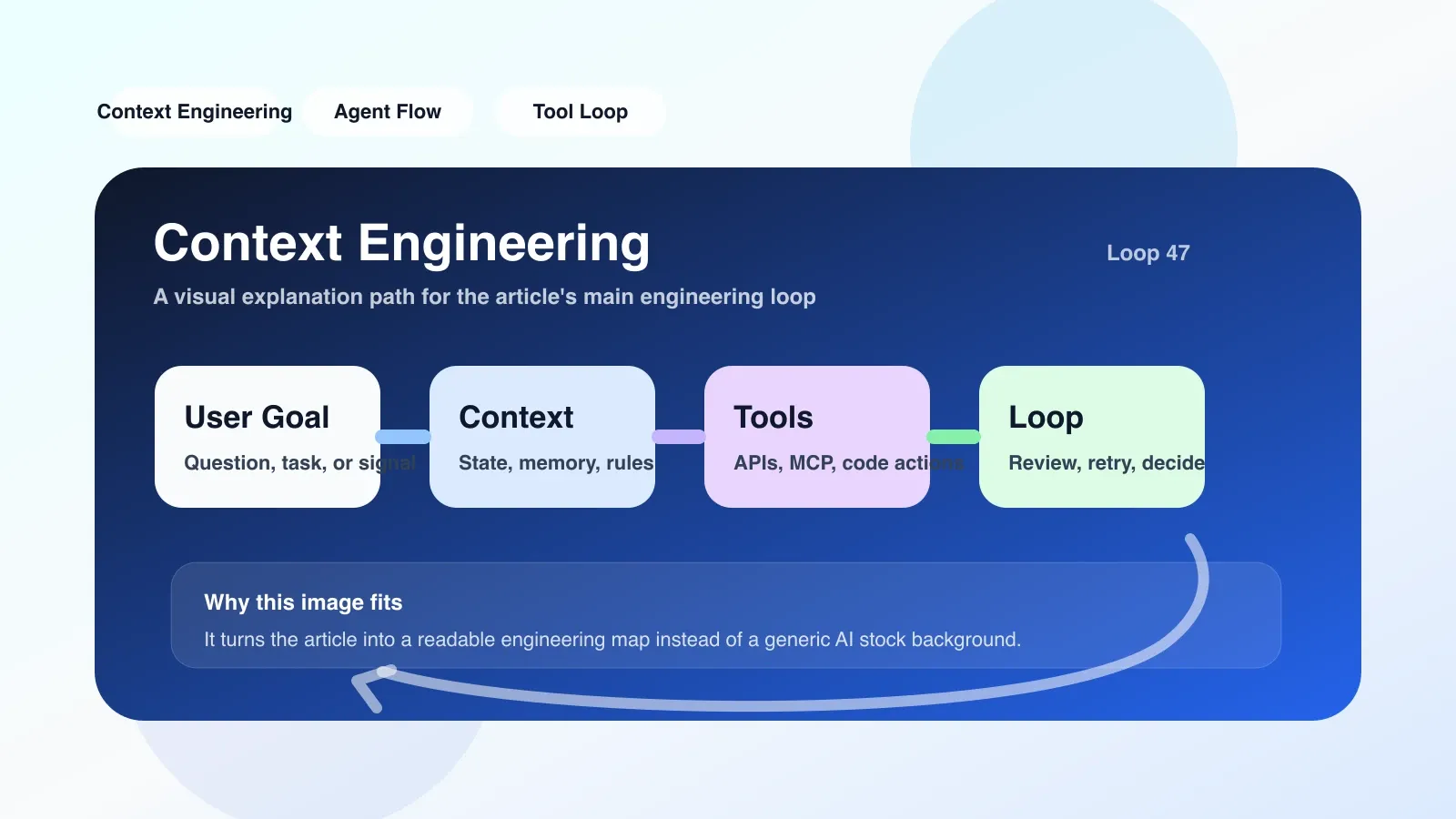
The most easily overestimated or underestimated part of developer transformation
Overestimation: Thinking that mastering prompt engineering means knowing Context Engineering. In fact, the prompt is only part of the context. The real challenge is how to make the Agent's context consistent and non-conflicting after multiple tool calls.
Underrated part: Context memory consumption and latency. Many developers use the full context in the prototype stage, but after 100 rounds of conversations and hundreds of thousands of tokens in the production environment, the cost soars and the response slows down. Context Engineering teaches you how to do context compression, pruning and expiration strategies.
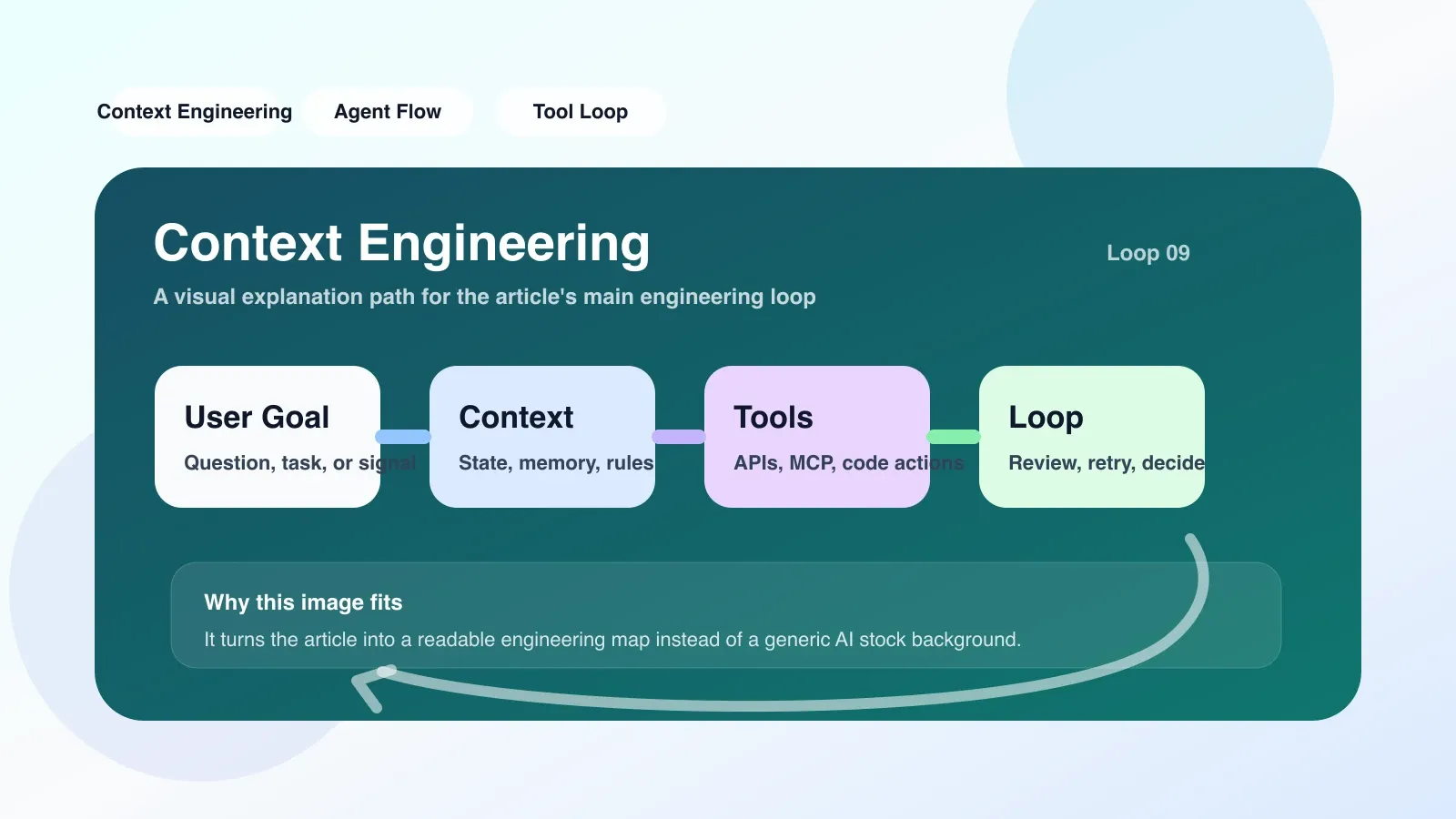
Which real-world exercise would I recommend starting with?
Exercise: Add a contextual memory layer to an existing API service
- Choose an API endpoint you are familiar with (such as weather forecast, inventory query).
- Write a simple Agent that can ask questions three times in a row (such as: "What's the weather like today?" "What about tomorrow?").
- Manually build a context schema: containing at least
session_id,user_query,assistant_response,tool_calls,timestamp. - Each time the Agent answers, the context is stored in the local JSON file.
- In the next request, read the last 3 records from the file and inject them into the system prompt.
After completion, you will find that the Agent can "remember" the first two rounds of dialogue. This is the minimal practice of Context Engineering.
The most common way to fail during practice
The most common failure: Too much context injection causes the prompt to be cluttered, and the Agent ignores new instructions.
Scenario: You inject 10 historical records and 3 tool return results into the Agent. As a result, Agent misunderstood the user's current question "Help me check the order status" as "Continue to perform the previous return operation".
Cause: The context is not prioritized. Critical current intentions are lost in historical noise.
Solution: Add a priority field to the context schema, and the current user's messages will always be ranked first. And the setting context window can only retain the last 5 valid interactions.
When should you upgrade to systematic learning or courses?
When you find that manually maintaining context schema cannot meet your needs:
- Need to support multiple Agents sharing the same context pool;
- The context needs to be persisted to the database and support high concurrent reading and writing;
- Requires dynamic pruning, vectorized retrieval and automatic summarization context.
These are systems engineering problems that require a systematic learning path. If you encounter the above bottlenecks, it is recommended to enter more systematic original paid articles or courses to learn advanced content such as Context Managers, MCP protocol, LangGraph context flow, etc.
Small but crucial alternative
If Context Engineering is too heavy for you at this stage (such as a small team, project demo stage), you can use these alternatives first:
- Reuse Code: Use simple
deque(maxlen=20)to manage recent context. - Outsourcing: Use the contextual tracking capabilities of LangSmith, Weights & Biases.
- Reduce complexity: Each Agent call only injects the input and output of the previous step, discarding the entire history.
But be warned: these alternatives will limit the Agent's performance on complex tasks. If your goal is to transition from developer to agent engineer, you must ultimately embrace Context Engineering.
Summary: What’s the next step?
Context Engineering is not a dispensable optimization, but the foundation of Agent engineering. It solves the core problem of "how Agent understands the world".
Your next step: Complete the minimum exercises above, and enter systematic learning after encountering bottlenecks.
No comments yet. Be the first to share your thoughts.