
If you want to transform into an agent engineer, is it worth learning Harnesses first?
What kind of shortcomings in Agent engineering capabilities does it make up for?
In Agent development, the most painful thing is not model selection, but the inability to reproduce online behavior locally. You wrote a tool calling logic, and when you ran it, you found that the Agent called the wrong function five times, but you don't know whether it was because the prompt was missing or the environment variables were wrong.
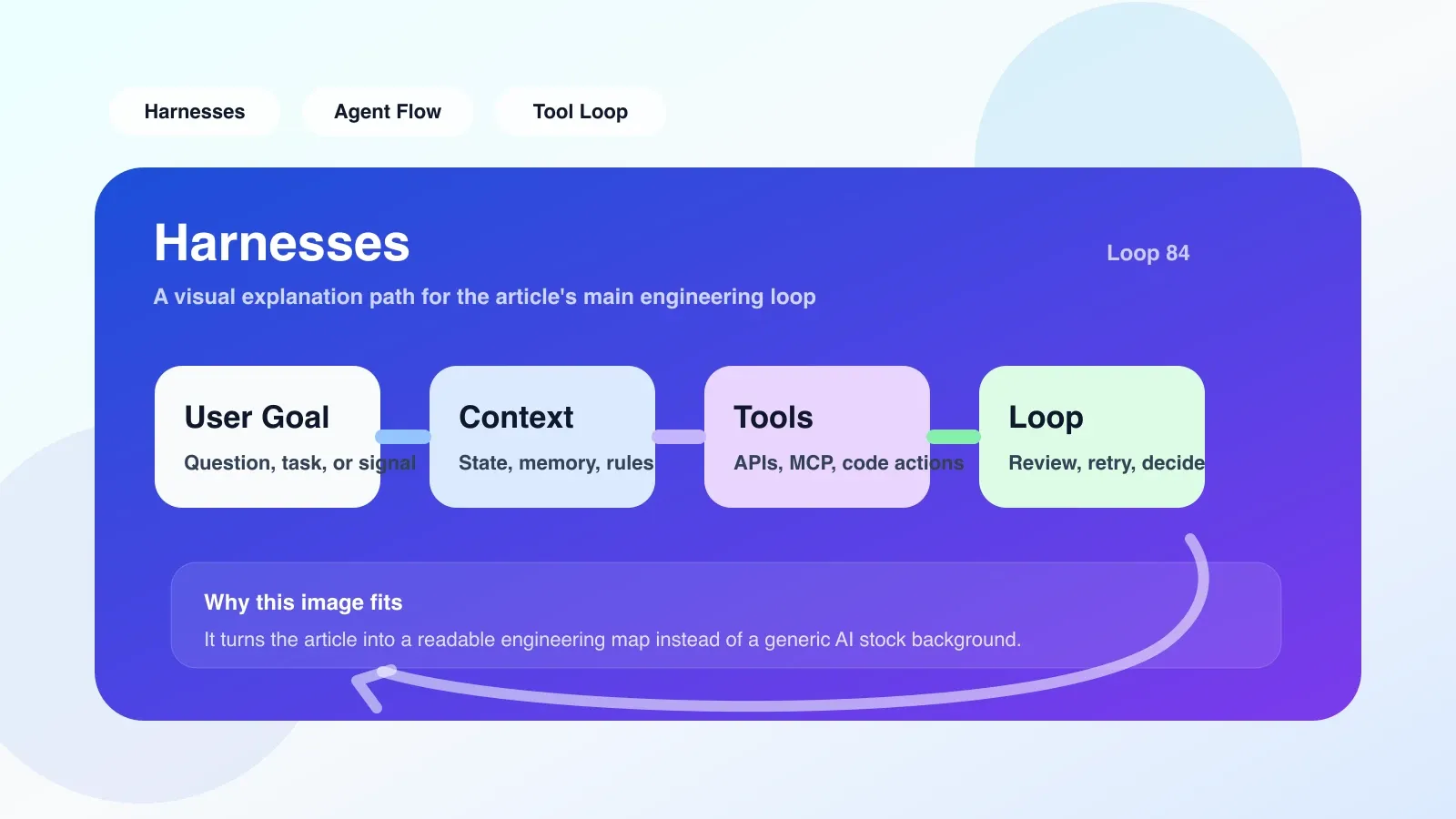
**The core problem that Harnesses solves is to allow developers to simulate the Agent's tool execution and contextual interactions in a controlled, repeatable test environment. ** It is essentially a "test fixture", but for the AI inference loop rather than traditional unit testing.
For example: you have developed a Customer Agent and need to call the CRM API to query customer information. In a real environment, each test requires actually making a network request and manually constructing complex states - a customer has three order records and another has been cancelled. Harnesses allow you to mock out these API responses and observe the Agent's next actions. Its value is not to help you write prompt, but to let you see what behavioral twists and turns occur after prompt is called by the tool.
The pain from ordinary developers to Agent engineers: the part you are most likely to overestimate and underestimate
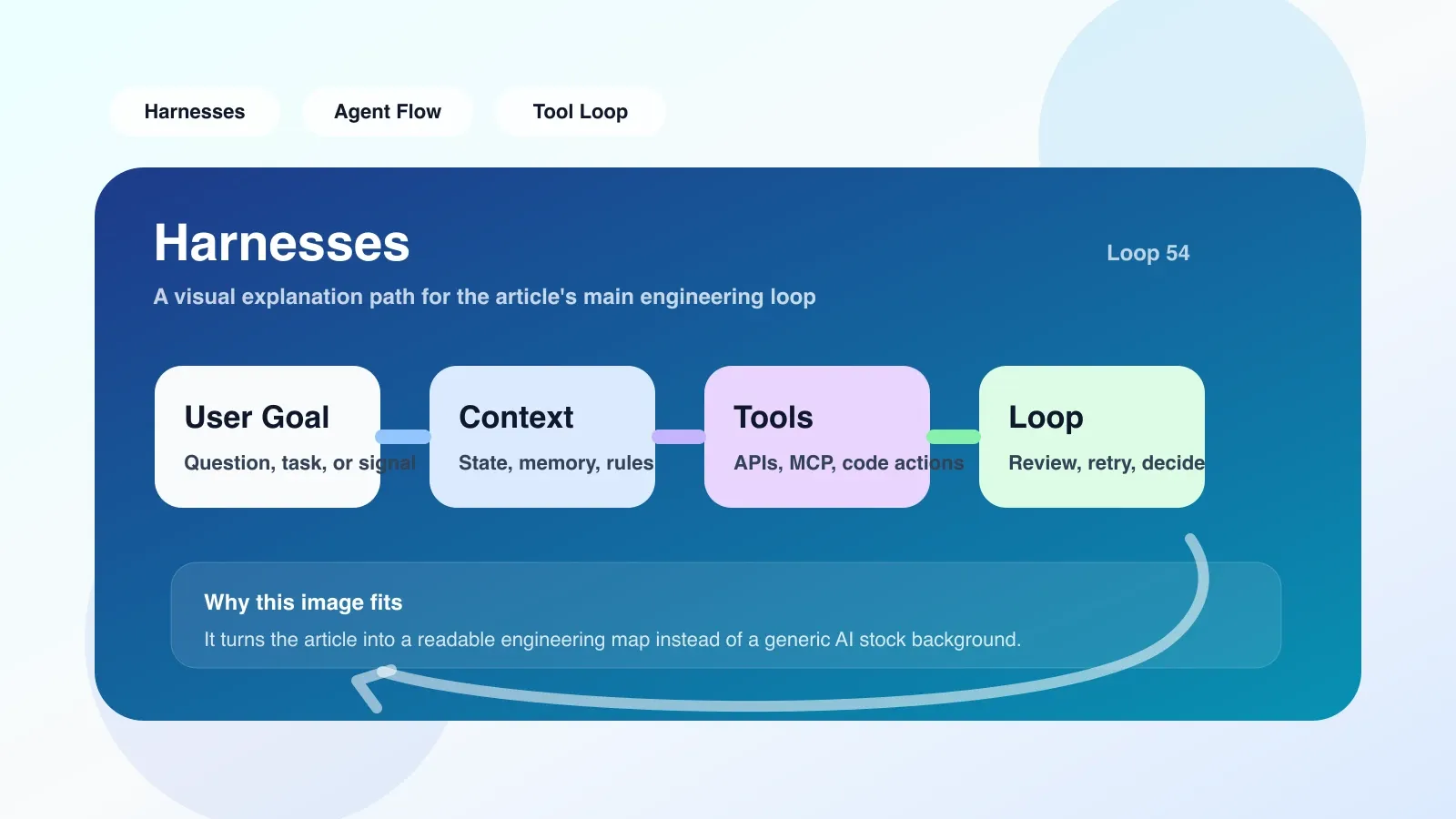
**Overestimation: Writing a running Agent is easy. ** The fact is that it takes less than an hour for most developers to write a demo using LangChain or OpenAI SDK, but once the Agent is required to stably perform tasks in a changing environment, problems are immediately exposed:
- The number of tool calls is out of control
- The context window is filled with irrelevant information
- Agent is stuck in an infinite loop
**Underestimated: the cost of debugging these issues. ** Many beginners think that just looking at the log is enough, but in real scenarios, the Agent's decision-making chain may span dozens of steps, and the input and output of each step involve a large amount of JSON. Just by checking the log with the naked eye, you will soon be overwhelmed by the massive amount of information.
The value of Harnesses shows here: it provides a lightweight sandbox, and each test contains a complete record of tool calls, context changes and final decisions. You can set breakpoints, view variables, and playback every step just like debugging a normal program.
But note: Harnesses are not equivalent to inference engines. It only simulates and records, regardless of whether your Agent's decision-making logic is correct. If your prompt has a logic flaw, Harnesses can expose it but cannot automatically fix it.
A real practice scenario: start with a set of fictitious tests
Let's say you're building a "smart compliance check assistant" that needs to read contract documents, extract key risk clauses, and then call the compliance database for matching.
You don’t want to touch the real contract yet—because the data is sensitive and the environment hasn’t been set up yet. The usage of Harnesses at this time is:
- Construct a set of micro test cases: such as a sample contract containing hidden risks (can be in Markdown format).
- Define the expected output for each test: which clauses should be marked and what the match status should be.
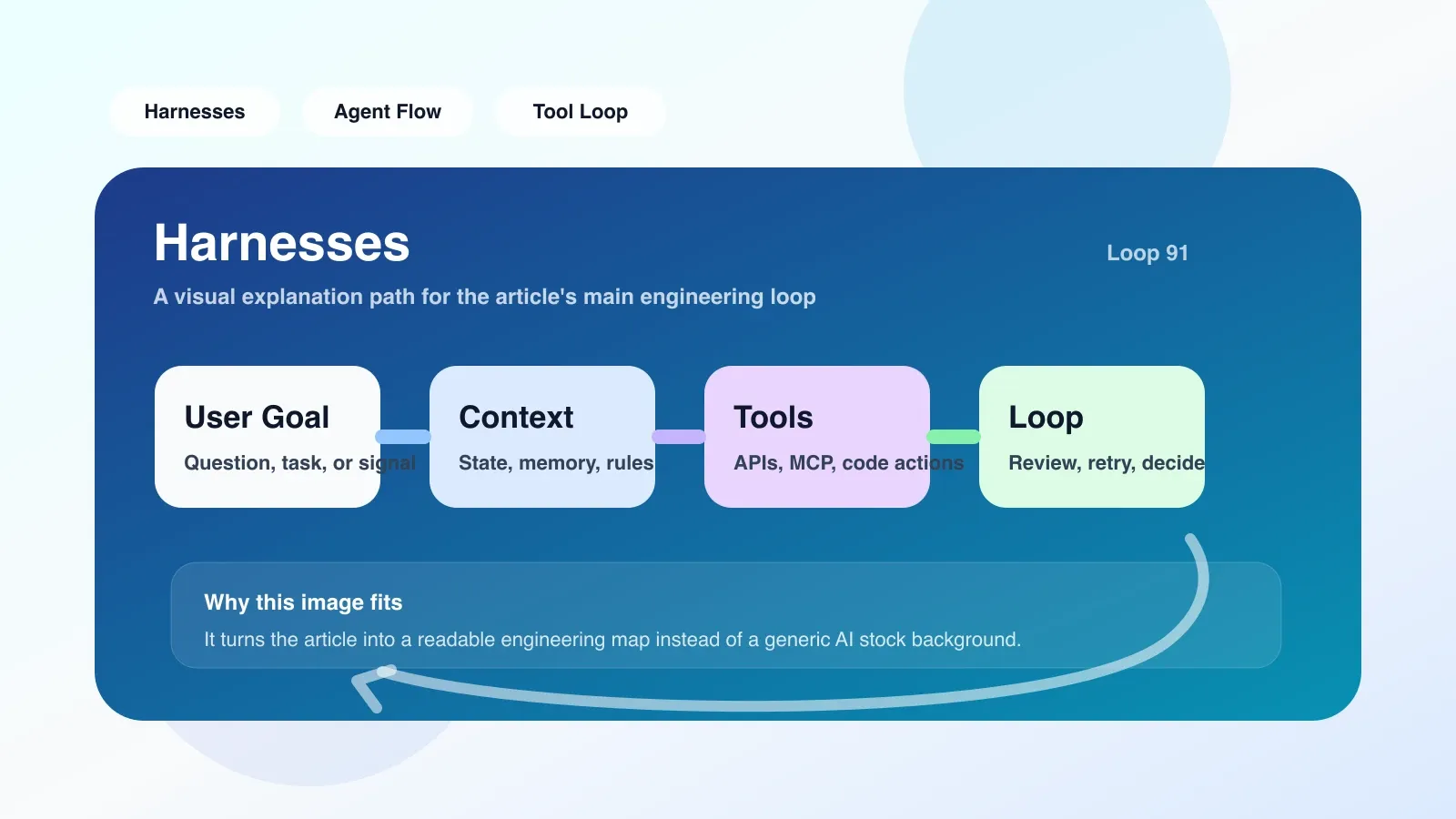
- Call Harnesses to run the Agent: it will execute your compliance query process and output the tool call results of each step.
- Compare the actual output with the expected output: After finding any inconsistency, adjust the prompt or tool chain.
**The real output is: you can play back this set of tests in batches. Every time you change the prompt or add a new tool, you will immediately know whether it breaks the existing functions. ** This approach directly draws on the concept of regression testing in continuous integration, except that now the behavior of the Agent is tested instead of the function return value.
The most common way to fail: Thinking that you "know it" but not getting through the key scenes at all
The easiest pitfall is: **Only tested the happy path, ignoring the boundary conditions. **
For example, in the above compliance inspection scenario, most novices only test the normal situation of "the contract contains clear risks", but ignore: -The contract content is empty
- Reference to expired compliance database entries
- Tool call timeout
- Agent incorrectly modified input context
After running Harnesses, you may find that the test pass rate is 100%, but once deployed, it crashes in the first minute of going online because network jitter is not simulated.
**The second pitfall is to regard Harnesses as the final validation. ** Harnesses are local simulations and can never fully replicate the massive concurrency, real API latencies, and model version changes found in production environments. Relying on Harnesses for final validation is like going live only after unit tests pass - you're bound to fail during integration testing.
**The third pitfall is that the test data is too poorly written. ** Many people write a set of Mock data and then never update it, causing the Harnesses test to be disconnected from the real semantics after the Agent iterates for a period of time.
When should you upgrade to systematic learning or courses?
If you continue to encounter the following problems when using Harnesses, it means that you need a more structured knowledge system:
- You can't explain why the Harnesses simulation runs fine but always fails online
- You need to manage multiple Agent test suites at the same time, which increases maintenance costs dramatically.
- You find that the quality of your Mock data begins to restrict Agent performance improvement
At this time, it is no longer enough to rely on a tool document and scattered practices. You need to understand the overall life cycle of Agent: from design, implementation, testing to deployment monitoring. It is recommended to look for system courses covering "Agent debugging methodology, context management, and tool integration patterns".
Alternate Plan: When to Give Up Harnesses and Go Another Way
Harnesses are not a panacea. If you encounter the following situations, you may consider other options:
- Your Agent strongly relies on real-time external data (such as stock market conditions, weather), Harnesses' Mock cannot provide enough real feedback, you should consider an integrated testing framework (such as Playwright's web automation)
- Your team is already using mature LLM observation platforms (such as LangSmith, Weights & Biases) which have debugging and replay capabilities built in, Harnesses may be redundant
- Your project goal is rapid prototyping, the cost of building Harnesses may be higher than directly testing in a real environment
Next action
Now you know what Harnesses can and can't fix, and where you're most likely to stumble. If you decide to give it a try, here are some suggestions:
- Open your code editor, start with the simplest Agent (such as a weather query robot), and use Harnesses Mock to remove the API.
- Deliberately create a failure scenario (such as returning empty data) and observe the Agent behavior.
- Version management of test scripts as part of the project.
If you are already doing these steps and encounter deeper problems (such as testing strategies under multi-Agent collaboration, dynamic management of context windows), then the next systematic course is ready for you.
No comments yet. Be the first to share your thoughts.