
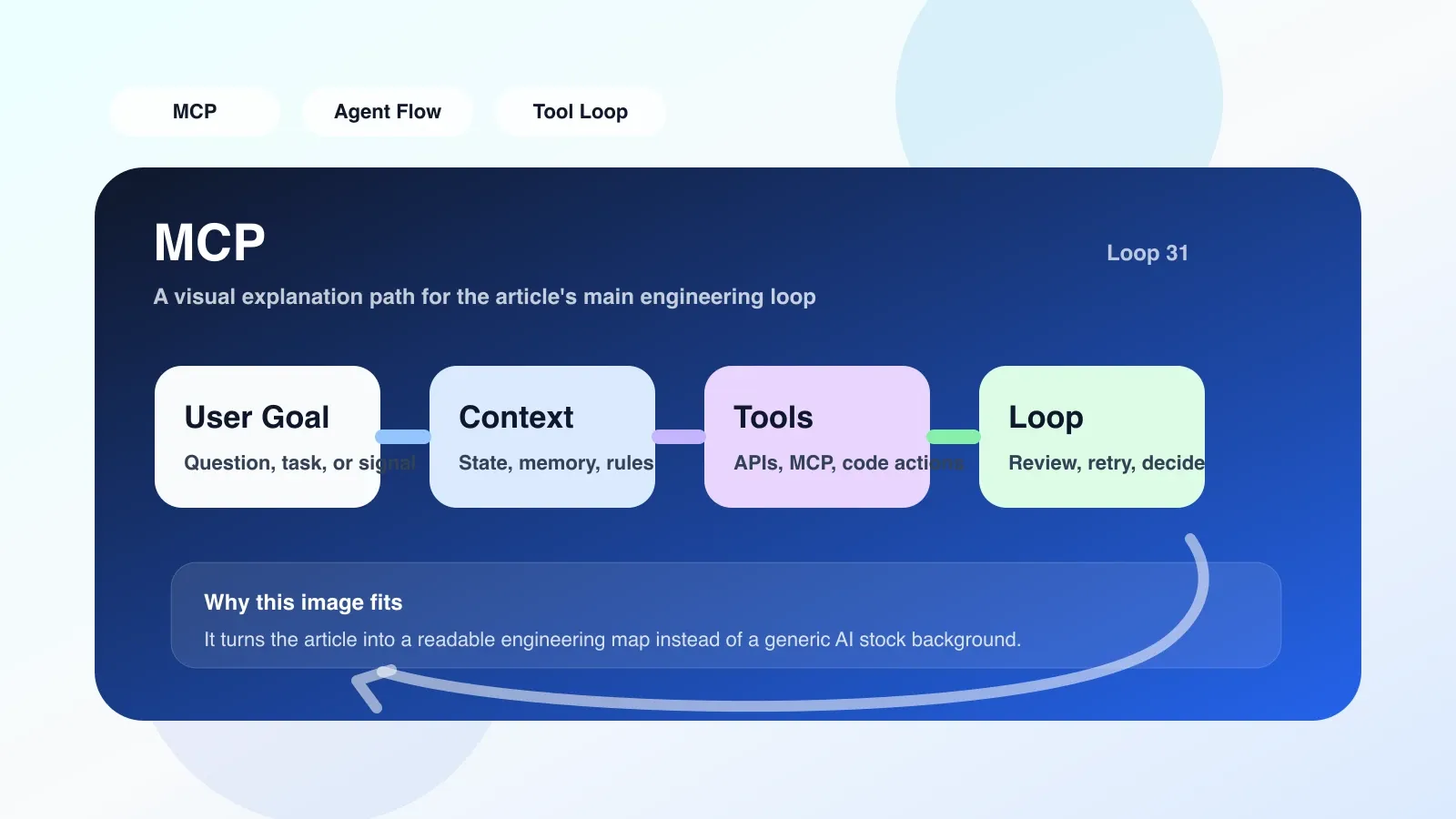
Overrated MCP and underrated perception loop
The biggest difference between Agent engineers and ordinary developers is not how much code they can write, but whether AI can autonomously perceive, make decisions and execute in a real environment. MCP (Model Context Protocol), as a standard protocol for connecting AI models and external tools, indeed makes tool integration easier than ever - you can use a protocol to let LLM call the database, file system or any API, saving the time of writing interface adaptations for each tool. But if you think that you can become an Agent engineer by learning MCP, you have fallen into the earliest trap.
MCP only solves the "tool call" layer, and the core of the Agent project is the perception-thinking-action cycle. Tool calls are part of "action", but sensing (how to obtain the state of the environment and feed it back to the model) and thinking (how to plan steps, weigh priorities, handle surprises) are trickier capabilities. When I helped the team migrate to MCP, I found that most developers overestimated the value of the protocol itself and underestimated the difficulty of designing awareness loops.
A real scenario: the automatic code review agent overturned
Suppose you are building an automated code review agent using MCP. Your design is: when a PR is submitted, the Agent reads the diff through the GitHub API (integrated through MCP), calls LLM to analyze the changes, and then comments under the PR through the release message tool of MCP. Seems reasonable, right? During actual operation, you find that Agent often gets stuck on three things:
- No context awareness: The agent only looked at the current diff, but did not know the historical changes of this file or related issue discussions, resulting in duplicate or even contradictory comment content.
- Out-of-control loop: When the Agent discovers a lint error and recommends repairing it, it performs the repair again, but the automatic submission of the repaired code triggers a new PR event, and the Agent is awakened again, forming an infinite loop.
- Tool selection error: The Agent misused the "Delete File" tool to "delete a line of comments" because it took the "Delete" command literally without first confirming the context of the file.
These failures are not a problem with MCP, but you will definitely encounter them when building an "action layer" with MCP. MCP only gives you a standardized interface, but where the sensing information comes from, how to design the loop logic, and how to handle the boundary conditions, all need to be implemented by yourself.
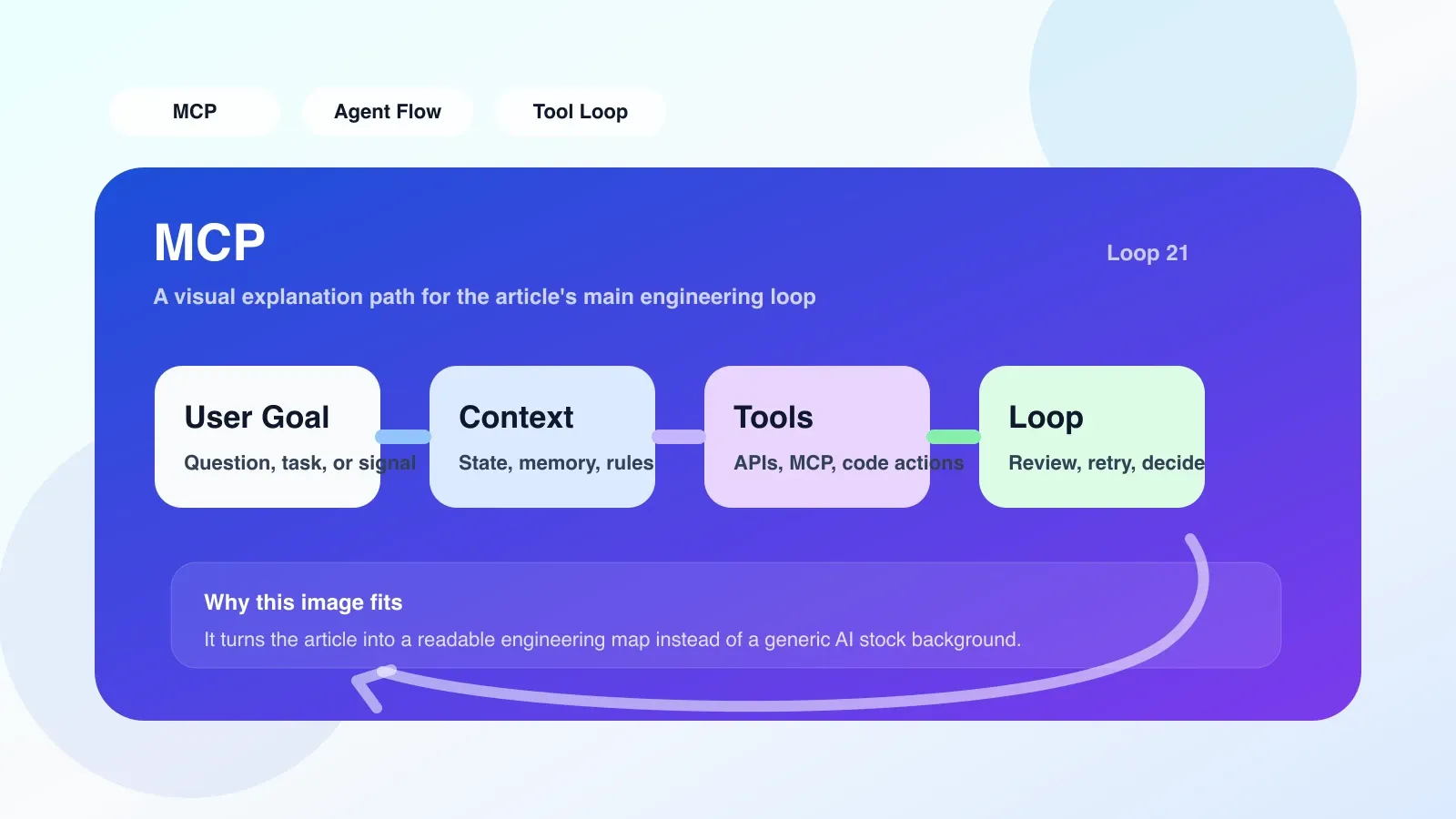
Step One: Shift from "Single Call" to "Sense-Action Loop"
I suggest that your initial exercise is not to write a fully functional Agent, but to modify a script you currently use every day. For example, if you have a script that automatically cleans temporary files, turn it into an Agent:
- Use MCP to expose file system tools: including list, read, delete, rename and other operations.
- Add sensory input: Instead of directly hard-coding the deletion rules, let LLM read the disk usage through MCP and then decide which files need to be deleted.
- Set loop limit: After the Agent performs a deletion, let it re-read the disk status, compare the changes before and after, and continue if the space is not released enough, but it will loop up to 3 times.
- Add confirmation link: Before actually executing delete, let the Agent output a "list of files to be deleted", and then you can manually approve or reject it.
Most developers get stuck on "perceptual input" in the first step. You may think: It is easy to directly read the disk usage, just use the Get-DiskUsage or df command. But the question is: how does LLM know it needs to call this command? You need to expose "perception" to the model as part of the tool. Essentially, you need a collection of "context-aware tools" rather than just "operational tools." The MCP protocol does not distinguish between the two, but you must separate when designing your tool list.
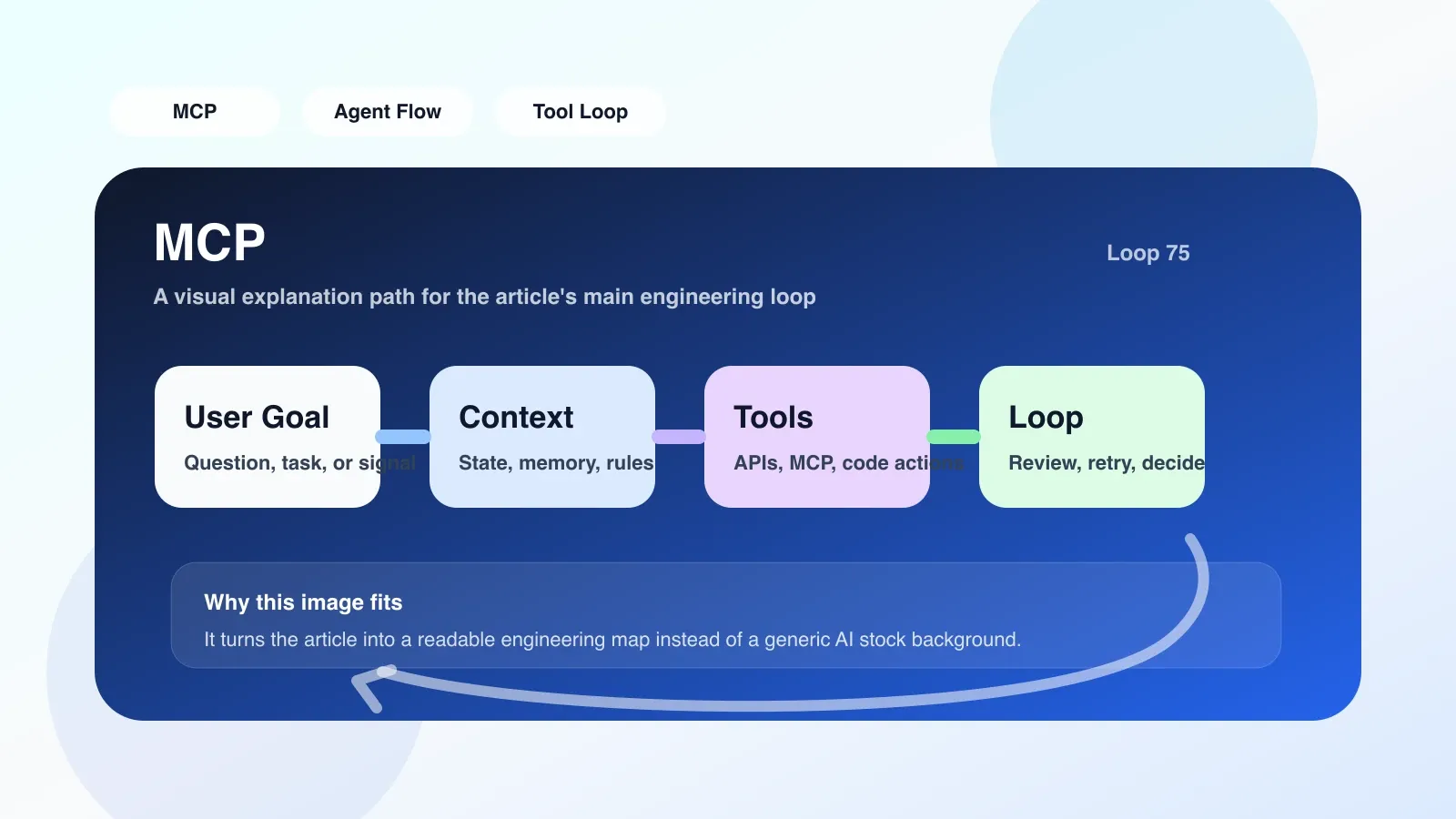
The easiest pitfall: treating MCP as a universal glue
The most common way to fail is to try to do everything with MCP. For example, let the tool itself make decisions instead of letting LLM make decisions, or write complex logic in the tool implementation and let LLM only do simple parameter transfer. This deviates from the original intention of Agent design - decision-making should be led by the model, and the tool only performs atomic operations.
Another common mistake is ignoring error handling. When the MCP tool call fails, does your Agent loop terminate directly, retry, or degrade? Many novices directly make Agent calls repeatedly, causing API exhaustion or infinite retries. The correct approach is to set a timeout and maximum number of retries for each tool call, and log it when downgrading for subsequent debugging.
Another point that is easily underestimated is the management of context windows. Each loop generates a new conversation history, which quickly fills up the context. You need to design a summary mechanism to compress the essence of the historical cycle into a brief status description instead of mindlessly appending it.
Alternatives in case of failure
If your MCP-based Agent still doesn't work stably after 3 iterations, don't fight the protocol itself. Consider the following alternatives:
- Fallback to hard-coded logic: For high-frequency, deterministic processes (such as file cleaning), writing a traditional program is more reliable. The costs of using agents to make decisions may far outweigh the benefits.
- Hybrid Architecture: Use MCP as the tool layer, but use a rule engine (such as a decision tree) instead of LLM to make some decisions. For example, "If the disk usage is > 90%, delete log files older than 30 days first" can be implemented with a simple if-else.
- Abandon Loops Completely: If your scenario is a one-time "query-answer" and no loops are needed, use simple Function Calling instead of MCP. The advantage of MCP is that it has multiple tools and multi-step scenarios, so you don’t need to use a knives to kill a chicken.
When should you upgrade to systematic learning?
When you find yourself repeatedly stuck in any of the following areas for more than a week, it’s time to consider systematic learning:
- Aware Loop Design: Don't know how to design state feedback and context compression.
- Tool planning strategy: How to make LLM sequence correctly when multiple tools are called.
- Security and Sandbox: How to prevent Agents from performing dangerous operations.
- Debugging capability: When the Agent behaves abnormally, it is difficult to tell whether it is a model problem, a tool problem or a circular logic problem.
Systematic courses can provide best practices in mature models (such as ReAct, Plan-and-Execute) and tool chains (such as LangChain, CrewAI), saving you a lot of trial and error time. But before that, you must first make a simple loop yourself and understand the core contradiction.
No comments yet. Be the first to share your thoughts.