
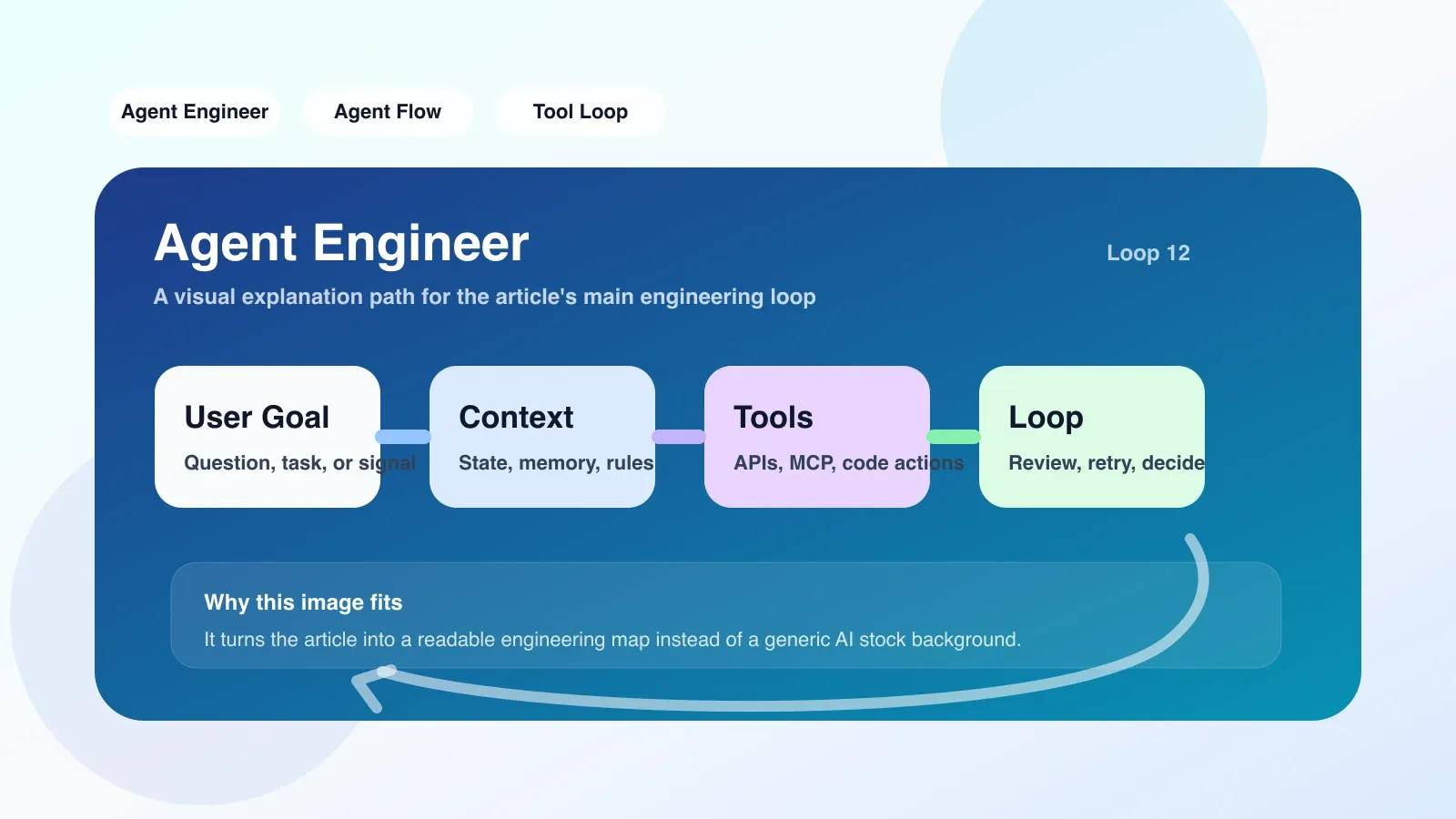
Why do you watch many tutorials but still don't know how to write the first agent?
When you search for "how to become an agent engineer," chances are you've written several AI projects—tuned the OpenAI API, used LangChain or Semantic Kernel. You might think you're just one concept away from Agent Engineer, but when you actually open the editor, you don't know what to write in the first line of code.
This isn't a matter of skill, but rather the tutorials you encounter all cover concepts: what is an Agent, what is a Loop, what is Tool Use. But no one tells you why it stops working the next day after you run an Agent Demo locally — that's the real reason you get stuck.
The Most Critical Step in Transforming into an Agent Engineer: From Demo to Reliable Reusability
Most tutorials will teach you how to write a chain call:
# 典型的 Demo 写法,问题很多
agent = Agent(model="gpt-4", tools=[search_tool, calculator_tool])
result = agent.run("计算今天的股票收益")
print(result)
这段代码能跑,但你在生产环境中绝对不敢部署。为什么?
- 没有重试机制:模型接口超时或返回错误时,整个流程直接崩溃。
- 没有状态持久化:每次运行都从头开始计算 Context,无法支持多轮对话。
- 没有错误隔离:当 search_tool 失效时,calculator_tool 的数据源不对,但错误信息混在一起难以排查。
最关键的一步,不是学会用某个框架,而是学会构建一个带有运行状态管理和错误恢复的 Agent 循环。这才是区分普通开发者和 Agent Engineer 的分水岭。
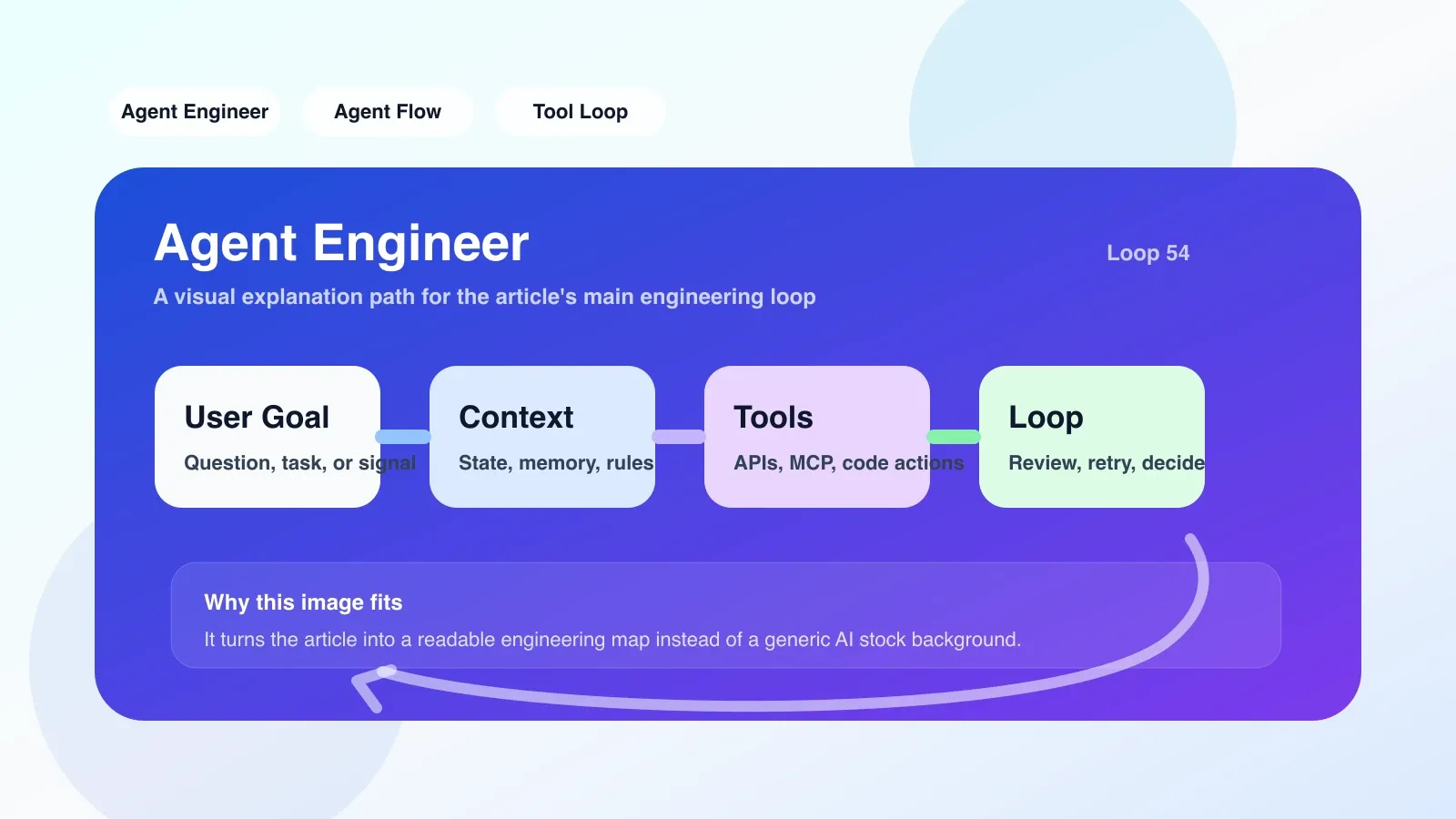
最容易失败的地方:Context 管理不当导致行为不可控
我见过最多失败案例:Agent 在简单任务上表现完美,但在复杂场景中开始“胡说八道”或“陷入死循环”。
根源在于 Context 没有做分层管理。开发者通常只有一个大 Context Window,把所有历史对话、工具返回、系统指令全部塞进去。当 Token 接近上限时,模型开始忘记早期指令,或者把工具返回的错误结果当成事实。
真实场景: 某开发者用 Agent 自动生成代码 review 报告。Agent 先调用 git 获取 diff,再调用静态分析工具,最后生成建议。起初 3 次以内都能正确执行,但第 4 次任务时,Agent 把前一次 review 的结论错误地当成了当前 diff 的一部分。
为什么?因为 Context 没有做 session 隔离。历史 Session 的 tool return 被当作当前 Session 的输入。
排查方法:
- 在 Agent 循环的每一步注入日志,打印当前 Context 中的关键字段(比如 system_prompt、tool_result、last_action)。
- 检查每次 Loop 开始前是否清理了不属于本 Session 的历史记录。
- 设置 Max Loop 次数上限,并记录触达上限时的 Context 内容——看是重复相同 Action,还是在不同 Action 间循环。
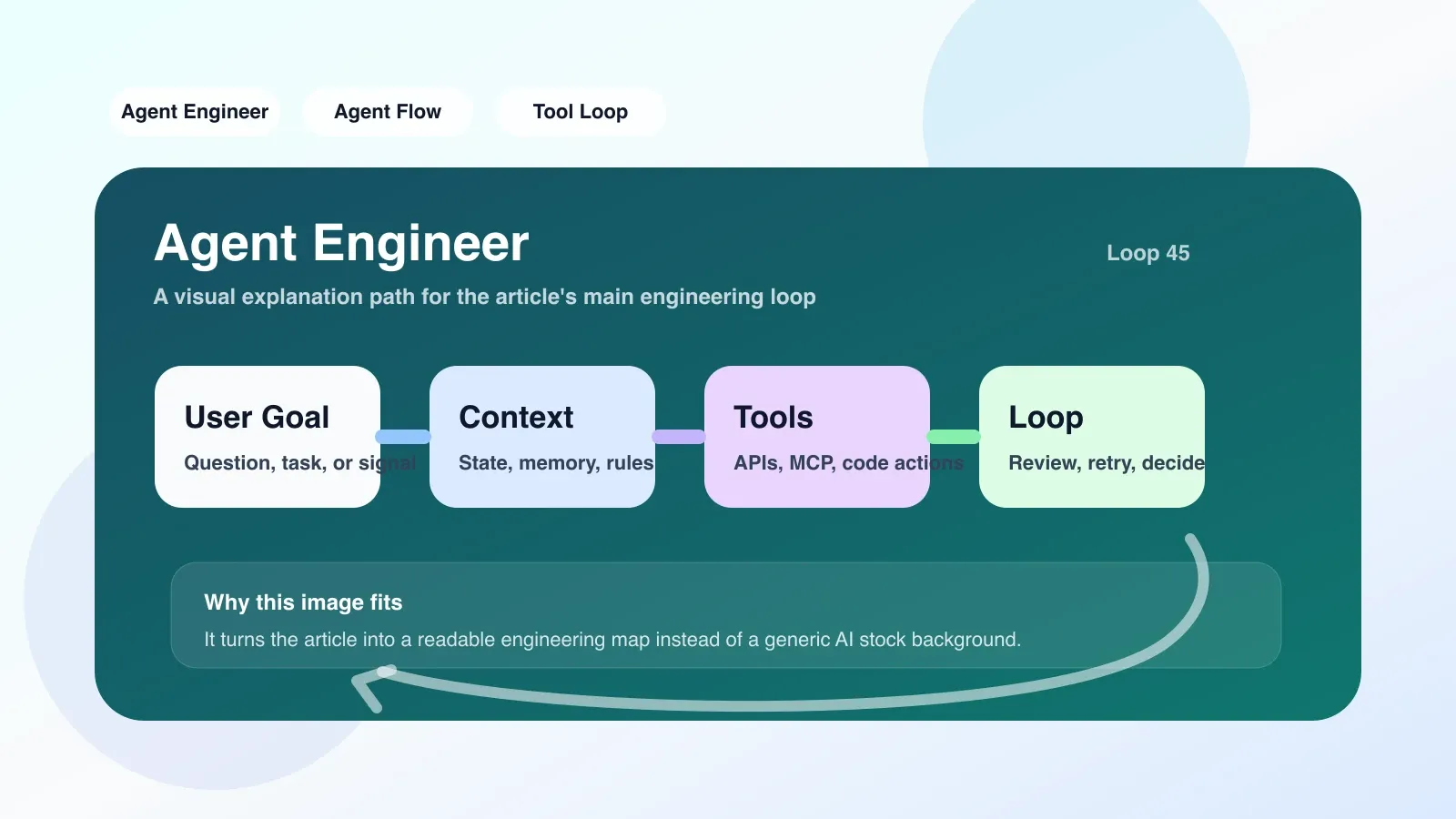
一条最小可执行路径:从今天开始
不要追求完美,先跑通一个带错误处理的最小 Agent。
第一步:选择基础层
- 如果你熟悉 Python,直接用 OpenAI 的 Responses API(或 Anthropic 的 Messages API),不要一开始就上框架。
- 如果你喜欢代码可读性,用 LangChain 的 AgentExecutor 但关闭自动重试,自己写重试逻辑。
第二步:写一个带状态管理的 Agent 循环
from openai import OpenAI
import json

class MinimalAgent:
    def __init__(self, model="gpt-4o", max_loops=10):
        self.client = OpenAI()
        self.model = model
        self.max_loops = max_loops
        self.history = [] # Only save assistant and user messages, not tool for complete return?

def run(self, user_input, tools=[]):
        self.history.append({"role": "user", "content": user_input})
        loop_count = 0
        while loop_count < self.max_loops:
            response = self.client.chat.completions.create(
                model=self.model,
                messages=self.history,
                tools=tools,
                tool_choice="auto"
            )
            msg = response.choices[0].message
            if msg.tool_calls:
                # Handle tool calls, pay attention to exception capture
                for call in msg.tool_calls:
                    function_name = call.function.name
                    try:
                        function_args = json.loads(call.function.arguments)
                        result = self.call_tool(function_name, function_args)
                    except Exception as e:
                        result = f"Error calling {function_name}: {str(e)}"
                    self.history.append({
                        "role": "tool",
                        "tool_call_id": call.id,
                        "content": result
                    })
                loop_count += 1
            else:
                self.history.append(msg)
                return msg.content
        raise TimeoutError(f"Max loops {self.max_loops} reached without final answer")
'`

**注意上面代码里的陷阱**:`self.history' only stores user and assistant messages, but tool returns are directly attached. This leads to infinite growth in context. The correct approach is: at the end of each loop, compress or clean the old tool return values, keeping only the results from the last 2 rounds.

### Step Three: Add boundary checks

In the `run` method, add:
- If the same tool is called three times in a row, the loop is forcibly terminated and returned with "Tool call stuck in loop."
- If the tool returns an Error, it does not retry but instead reports the error directly to the user, rather than having the model "guess" the correct result.

## The Most Likely Details to Fail: Do You Have to Handwrite Every Question by Hand?

No. You can use MCP (Model Context Protocol) to reduce the workload of tool integration. MCP provides a standard interface that allows agents to use local or remote services directly. But note: MCP will not help you with context management, error recovery, or loop limits—all of which you have to implement yourself.

**Failure Scenarios**:
One team used MCP to connect to five external tools, assuming the Agent would coordinate automatically. As a result, when the user asked "compare the code complexity of the two projects," the Agent called multiple tools but returned inconsistent data because each tool returned a different data format. The Agent mixed output without standardization.

## Next step: From minimum availability to engineering

Once you've mastered the smallest agent above, the next step isn't to learn more framework concepts, but to:
1. Introducing Logging: Structurally records each Loop's Action, Observation, and Thought.
2. Introducing caching: caching results for tool calls like powers (such as calculations and API queries).
3. Introducing tests: Write unit tests to cover three scenarios: "tool call failure," "loop overlimit," and "context overflow."
4. Followed by a full course: Systematic study of advanced topics such as agent observability, multi-agent collaboration, and long-term memory.

If you are ready, consider moving into a more systematic learning path.
No comments yet. Be the first to share your thoughts.