
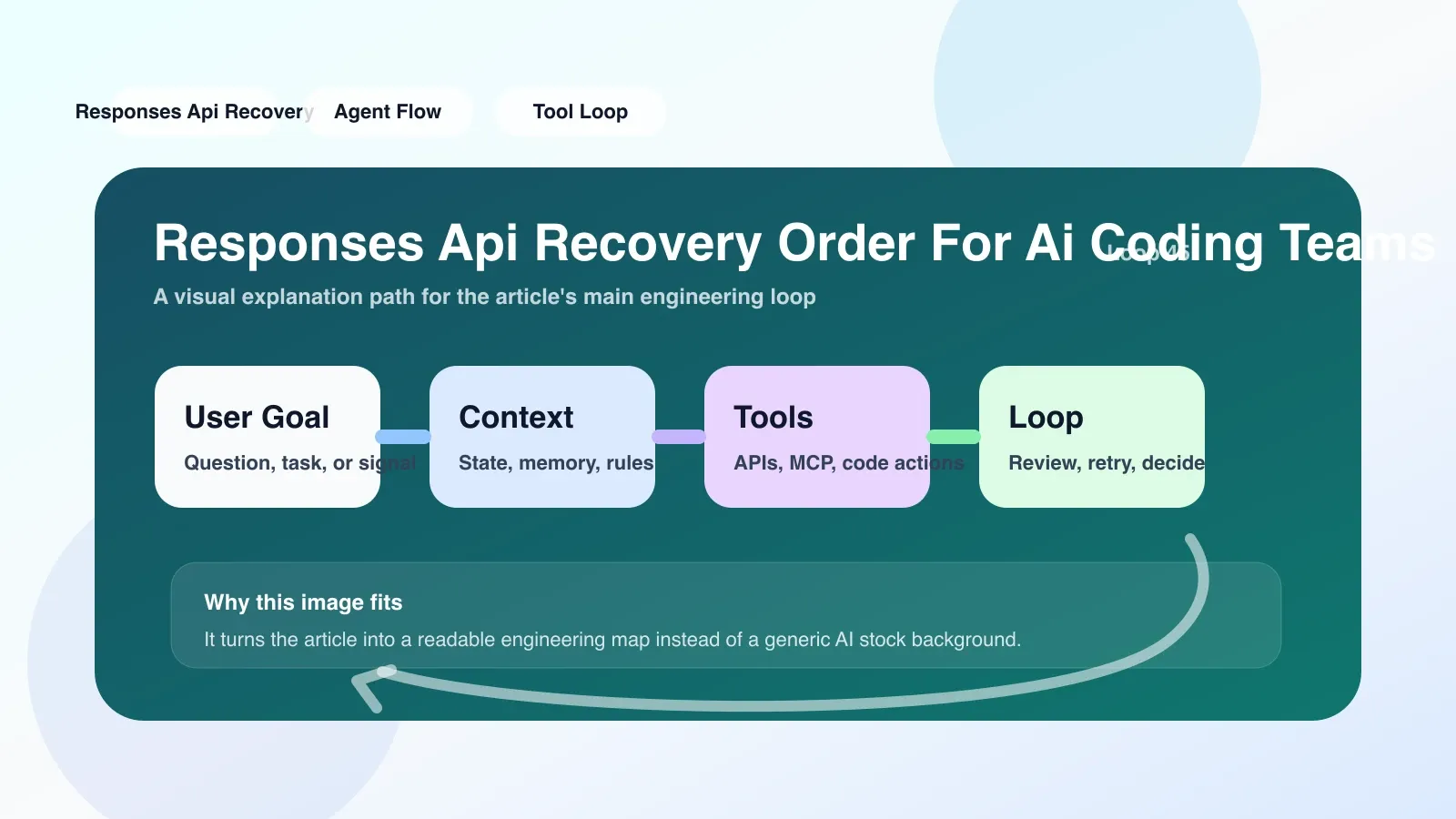
starts with
When your AI coding team begins to rely on APIs to generate code, submit PRs, and even automate deployments, a question that no one wants to mention but will encounter sooner or later emerges: **If an API response causes widespread damage, how do you recover? **
The first reaction of many teams is to get the ready-made solution "Responses API Recovery Order". But there are often multiple variations of a plan, such as a version for AI coding teams and a regular Teams version. The names of the two are similar, but when you actually start configuring the recovery strategy, you will find that the capability boundaries are completely different.
If you are a AI coding team, what is the cost of choosing the wrong version?
Let's say your team generates hundreds of code snippets every day via Responses API, which has automated testing and merge processes integrated in-house. If an abnormal response causes a large amount of error code to enter the main branch, what you need is a recovery solution that is aware of the code context and can roll back to a specific "code state" rather than a simple "request-response" record.
The universal Teams version recovery order only recovers by timestamp and request ID. It does not know which requests involve code changes and which are queries. The result may be that you roll back a correct set of query responses, causing dependent data to be lost. This is the most typical failure scenario - recovery granularity mismatch.
Target audience: Who needs the AI coding version?
| Dimensions | AI Coding Teams version | Universal Teams version |
|---|---|---|
| Core recovery unit | Code snippet + request context (branch, file path, diff) | Request-response raw record |
| Rollback granularity | Can roll back to a precise "code generation moment" | Can only roll back overall by request ID and time range |
| Dependency awareness | Automatically identify dependencies between code generation requests (such as one function generation depends on another function) | No dependency awareness |
| Error-prone scenarios | Incorrect rollback leads to incomplete code or broken references | Incorrect rollback leads to loss of normal data |
If you are a team that focuses on AI code generation (such as calling Codex or similar models to write code, automatic review, and automatic merging every day), then AI Coding Teams version is the only option to avoid secondary damage.
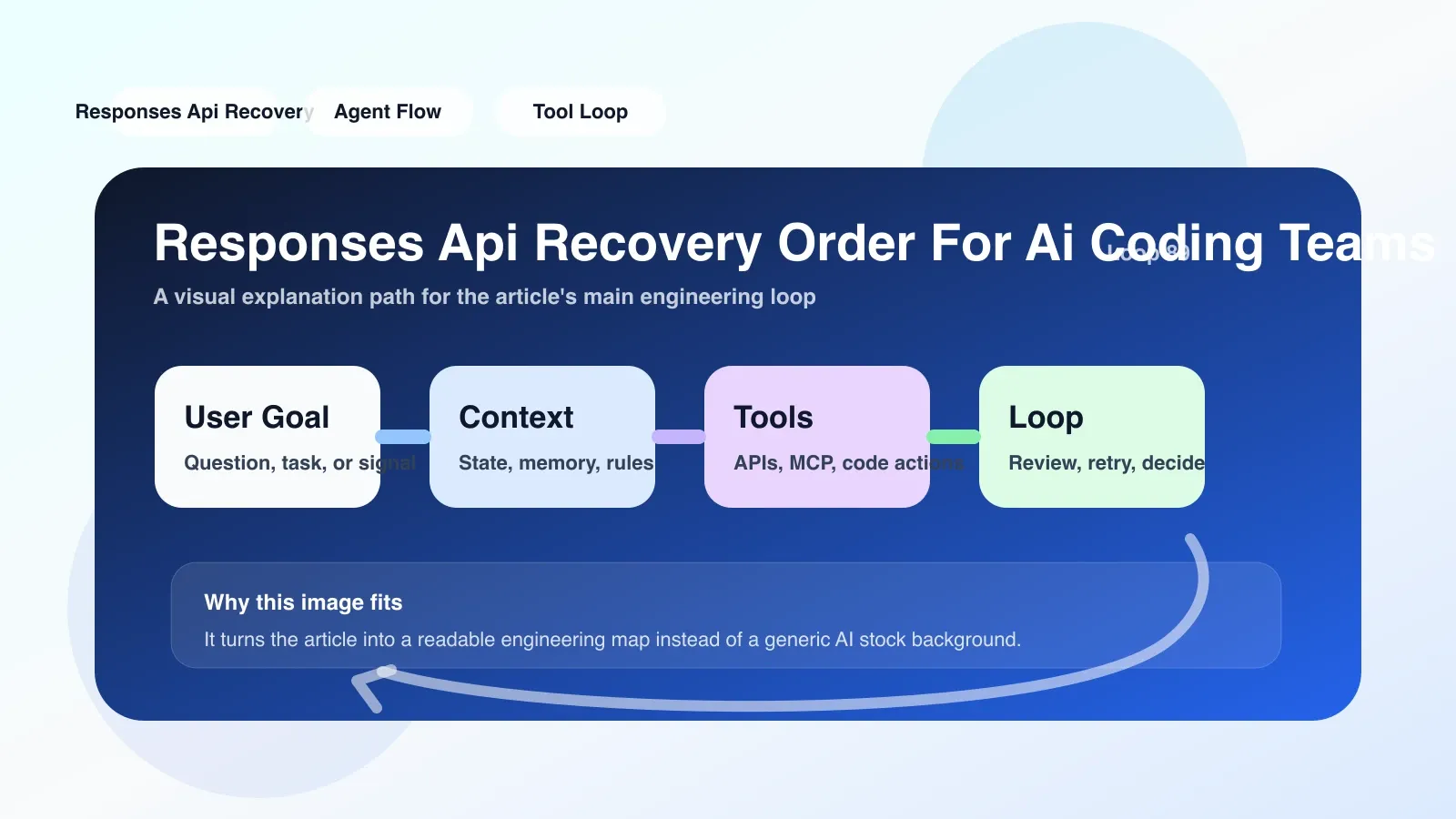
The three most easily mistaken details
1. The recovery sequence is not what you think
The general version recovery order defaults to recovery in ascending order of request time. The AI version is sorted by "code dependency topology": the referenced function is restored first, and then the caller is restored. If you follow the general version order, you are likely to get a bunch of compilation errors.
2. Different permission boundaries
AI version recovery operation requires additional "code write" and "branch push" permissions by default, while the general version only requires response log read permissions. Many teams only give read permissions when configuring the recovery pipeline, resulting in recovery failure.
3. No automatic repair after recovery
The AI version restores the code status, not the abandoned version. After recovery you still need to manually check for merge conflicts and rebuild CI. The general version only writes the API response back without any code logic processing.
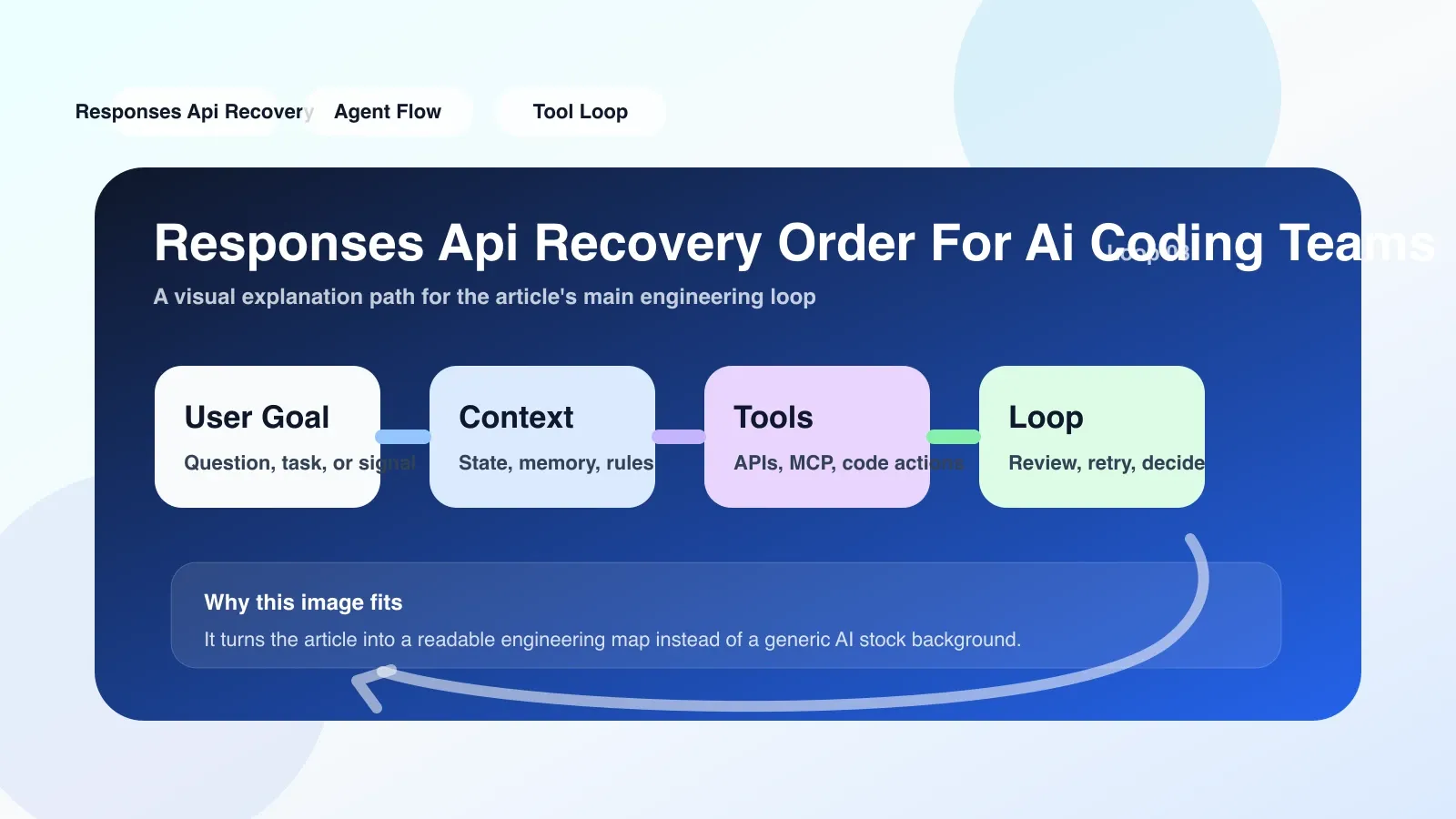
Real operation: How to configure Recovery Order of AI Coding Teams
If you confirm that you belong to the AI coding team, the following are the specific steps (taking common settings as an example):
- Enable code context logging: Add
X-Code-Context: branch=main&file=src/utils.pyto the API request header so that the recovery service can associate responses with code changes. - Set dependency mapping table: Declare dependencies between functions or modules in the recovery configuration file. If function A calls function B, configure
dependencies: [A depends on B]. In this way, B will be restored first when restoring. - Define recovery trigger threshold: It is recommended to automatically trigger recovery when more than 2 of 3 consecutive API responses contain compilation errors or test failures. If the threshold is too low, interruptions will occur frequently; if the threshold is too high, the damage will be widespread.
- Test recovery process: Use simulated destruction scenarios to verify whether the code can be compiled normally after recovery. Note: Recovery does not guarantee zero conflicts, just minimizing losses as much as possible.
Fallback plan for failure
If AI Coding Teams version is still broken after restoration (for example, the dependency chain is too long, the recovery time window is too long), you need to prepare a second line of defense:
- Preserve safe snapshots when cleaning up corruption: Use
git stashor a temporary branch to preserve the complete workspace before the corruption occurred. - Manually rebuild key functions: Extract the correct version of the code from the log and manually merge it into the restored branch.
- Downgrade to the general version: If AI version recovery continues to fail, at least the general version can ensure that the API response record is complete, and you can manually parse and reconstruct the code state.
Summary
When choosing the Responses API recovery order version, the core judgment dimension is: the recovery unit your AI coding team needs is "code semantics" rather than "API response packet". If you often deal with code generation, automatic merging, and cross-function dependencies, choose the AI Coding Teams version. If the team only uses the API to do language model queries (like ordinary customer service), the general Teams version is enough.
Next, you can start checking the current recovery configuration: see whether request context logging is enabled and whether dependency mapping is declared. The configuration process will involve permission adjustment and CI integration. It is recommended to do a test recovery on a non-critical project first.
No comments yet. Be the first to share your thoughts.