
A Call Chain Triggered by a Real Question
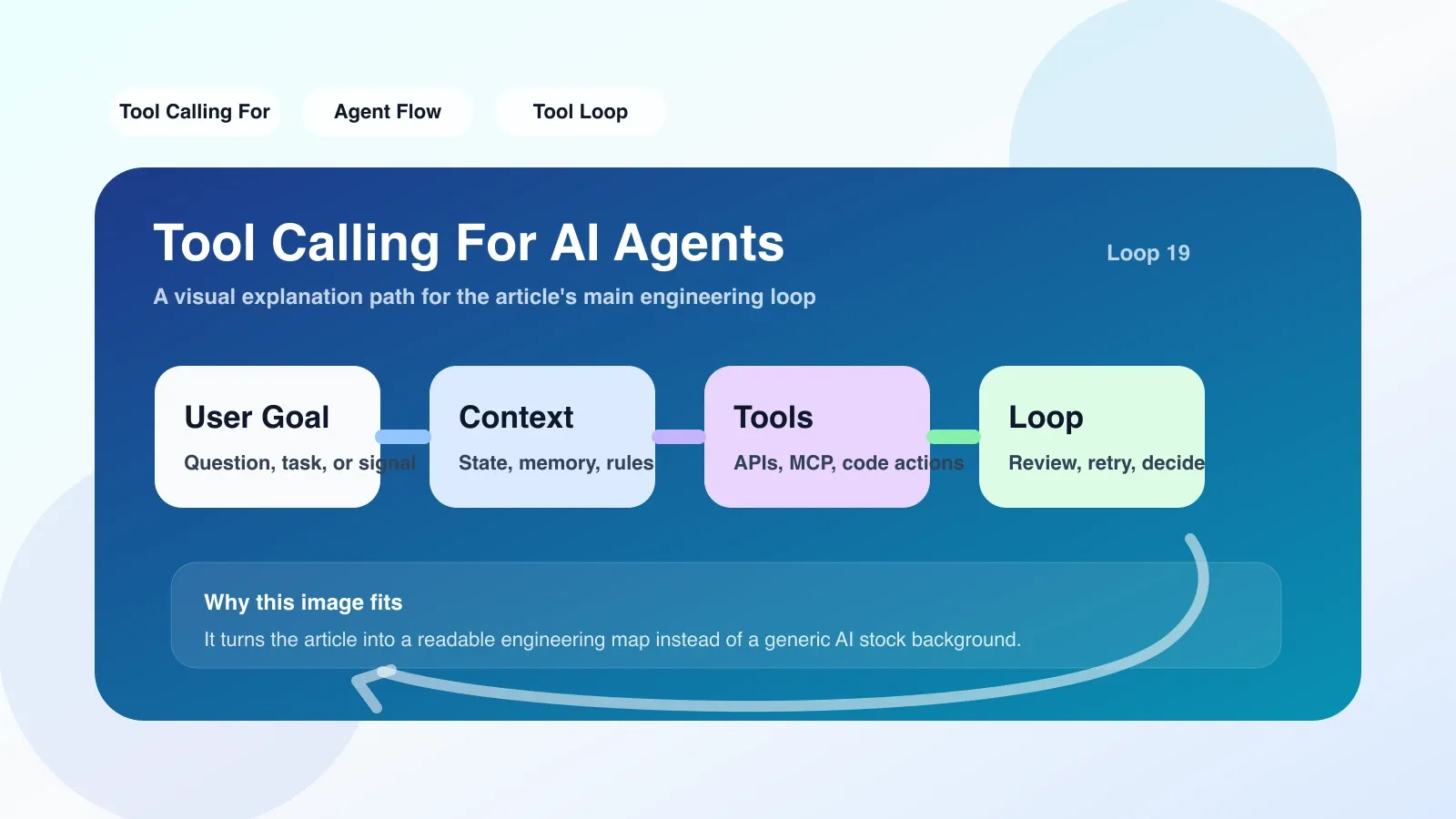
Suppose you are building a weather query agent. The user asks: "What's the temperature in Beijing now?" For the agent to answer, it must go through: understanding the intent → matching tool definitions → filling in parameters → executing the function → returning results → organizing a reply. This process is tool calling.
# 工具定义:一个简单的天气函数
def get_weather(city: str, date: str = "today") -> str:
    # 实际调用天气 API
    return f"{city} 在 {date} 的天气是晴,25°C"

# 工具描述(供模型选用)
TOOLS = [
    {
        "type": "function",
        "function": {
            "name": "get_weather",
            "description": "获取指定城市的天气信息",
            "parameters": {
                "type": "object",
                "properties": {
                    "city": {"type": "string", "description": "城市名"},
                    "date": {"type": "string", "description": "日期,格式 YYYY-MM-DD"}
                },
                "required": ["city"]
            }
        }
    }
]

# Agent 调用 LLM 时传入 tools
response = openai.chat.completions.create(
    model="gpt-4o",
    messages=[{"role": "user", "content": "北京现在多少度?"}],
    tools=TOOLS,
    tool_choice="auto"
)

# 模型返回 tool_call
tool_call = response.choices[0].message.tool_calls[0]
# tool_call.function.name = "get_weather"
# tool_call.function.arguments = '{"city":"北京"}'

# 你执行函数并返回结果
result = get_weather("北京")
# 将结果作为 tool 消息回传给模型
为什么 tool calling 是 Agent 的“手指”
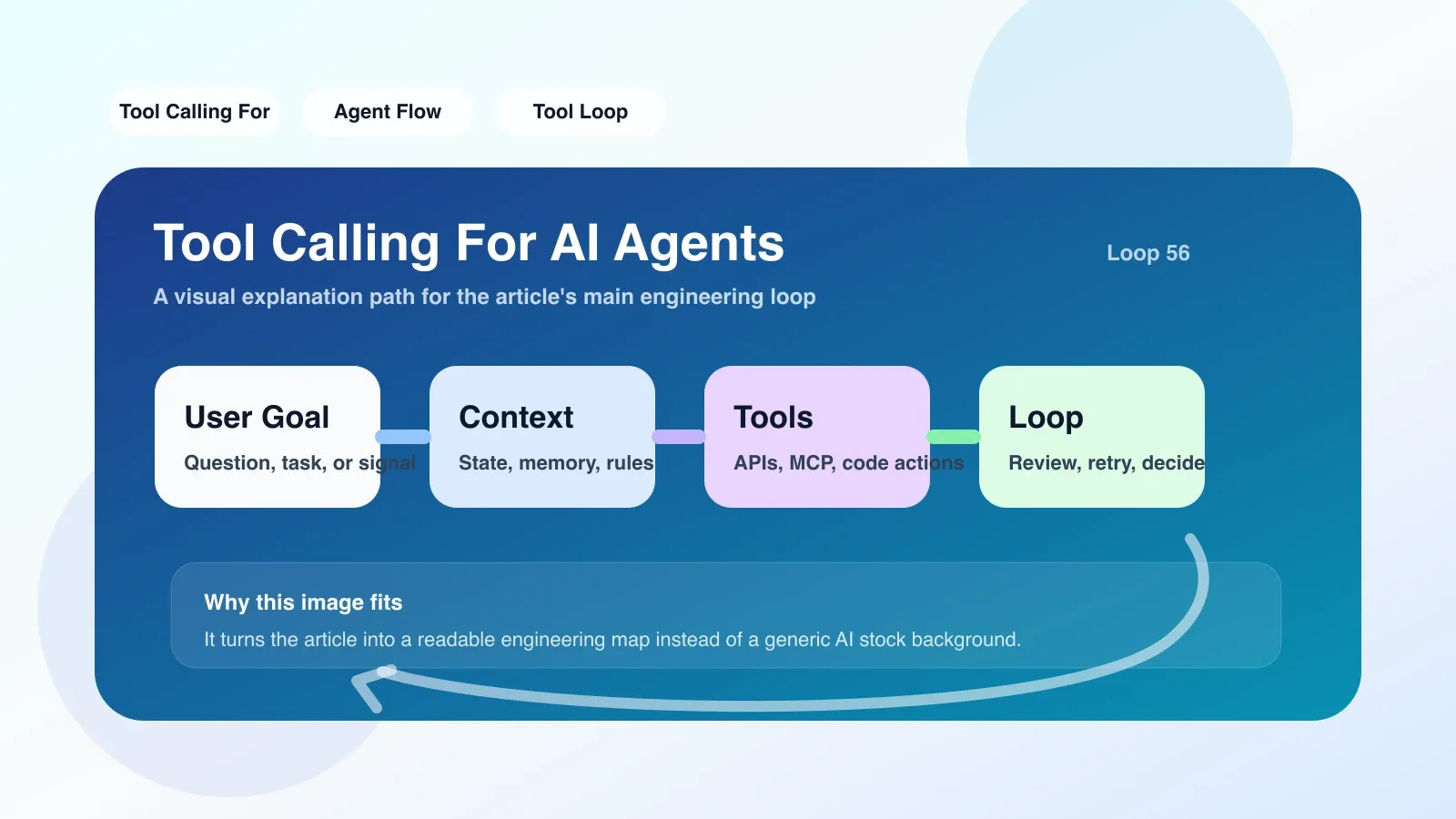
没有 tool calling,AI 只能生成文字建议,无法真正操作任何系统。有了它,Agent 可以:
- 查询数据库:
search_customer(customer_id) - 触发工作流:
create_jira_ticket(summary, priority) - 控制设备:
turn_off_light(room="living_room")
每个工具都是 Agent 的一只手。tool calling 就是大脑(LLM)指挥手的过程。
最容易失败的地方
1. 参数解析错误
模型可能生成错误的 JSON arguments——比如字段名拼写、类型不对、缺少 required 参数。
例子:
- 工具需要
city,模型给了location date格式不是YYYY-MM-DD而是"tomorrow"
应对:在工具描述里写清约束,解析时增加容错逻辑。
import json

def safe_parse_tool_call(tool_call):
    try:
        args = json.loads(tool_call.function.arguments)
    except json.JSONDecodeError:
        # The arguments provided by the model are invalid
        return None, "Failed to parse parameters"
    return args, None
2. 幻觉调用
模型在不确定时,可能虚构参数调用工具。比如用户没提到城市,模型却调用 get_weather("Beijing")。
应对:在 tool_choice 设为 "auto",让模型自由决定;如果工具是 destructive 的(如删除、修改),必须加入人为确认步骤。
3. 并发与冲突
Agent 可能同时调用多个工具(例如 parallel_tool_calls)。如果两个工具修改同一个资源,可能产生冲突。
应对:为每个工具设计幂等性或加锁机制。
真实场景:电商客服 Agent
场景:用户要求“帮我查一下订单 12345 的状态,如果已发货就提醒我签收,否则帮我取消订单”。
Agent 需要:
- 调用
get_order_status("12345") - 根据结果调用
send_reminder(user_id)或cancel_order("12345")
如果 get_order_status 返回 "delivered",Agent 调用 send_reminder。如果返回 "processing",则调用 cancel_order(但取消订单需要权限——此处容易失败:模型可能直接执行,你需要加上“取消前必须用户二次确认”的 guardrail)。
失败点:模型可能跳过确认直接取消订单。解决方案:将确认步骤建模为另一个工具 confirm_cancellation(order_id),要求 Agent 先调用确认工具,再执行取消。
替换方案:没有 tool calling 时怎么办
如果你的 API 或框架不支持 tool calling,或模型不支持 function calling,你可以:
- 用结构化输出模拟:要求模型输出 JSON 格式并且指定字段表示动作。例如:
{"action":"get_weather", "args":{"city":"Beijing"}} - 用文本解析:手动解析模型输出中的特定指令,例如“调用天气函数:城市=北京”。这种方式容易出错,但适合简单场景。
不过,标准 tool calling 让开发者只需定义工具描述,模型自动匹配,远比手动解析可靠。
落地第一步
- 选择一个支持 tool calling 的框架:OpenAI API、Claude API、LangChain、Vercel AI SDK 都支持。
- 定义你的第一个工具:从只读、非破坏性的开始,比如
search_knowledge_base. - Write a loop:
- Send user messages and tool definitions
- Process the tool_call returned by the model
- Execute the tool and return the results
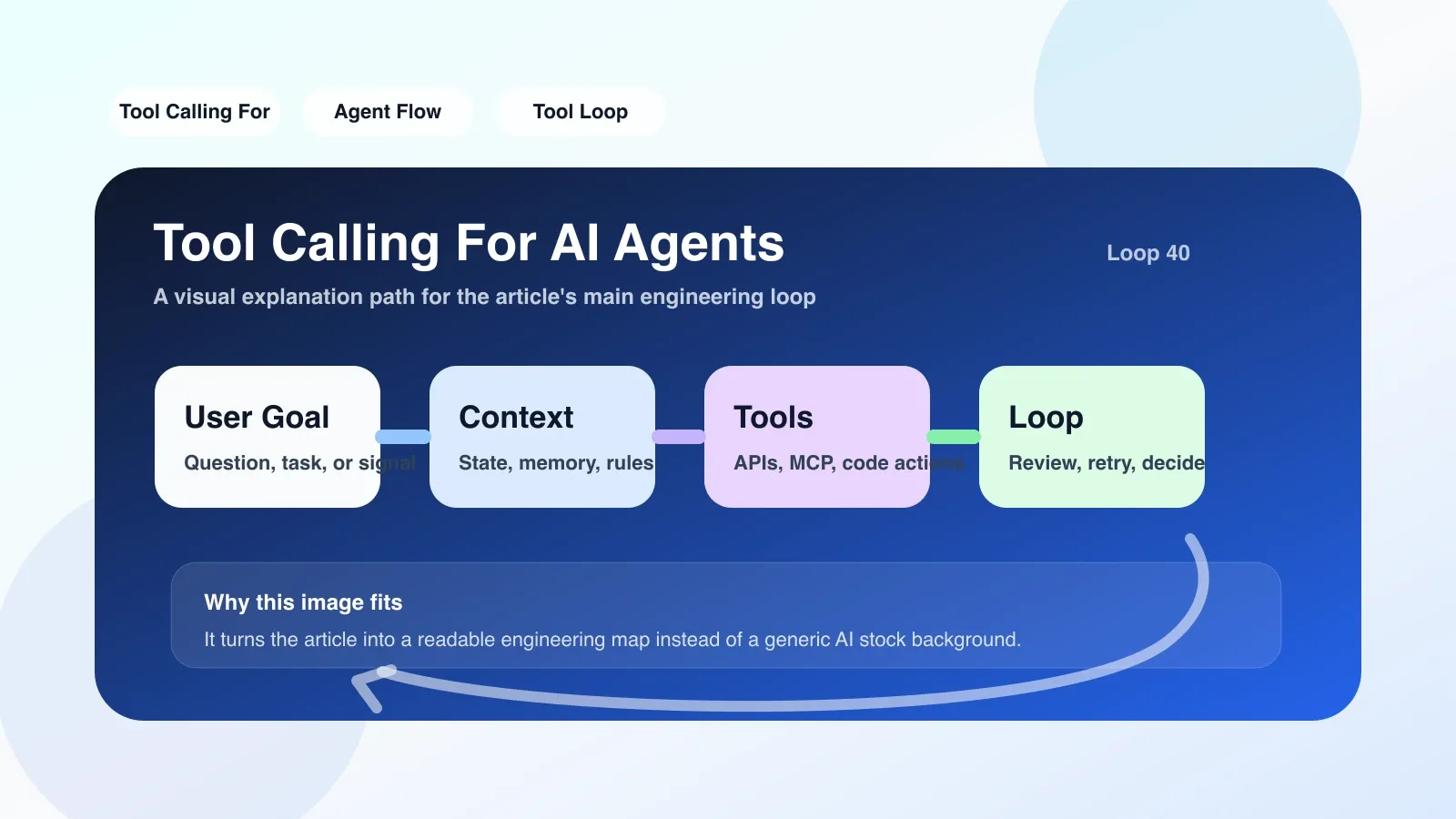
- Pass the results as a new message to the model, which generates the final reply
- Add error handling: In cases of parse failure, timeout, or tool exceptions, let the model adjust parameters or generate user-understandable prompts based on the error information.
# 一个简化版 loop
def agent_loop(user_message):
    messages = [{"role": "user", "content": user_message}]
    while True:
        response = client.chat.completions.create(
            model="gpt-4o", messages=messages, tools=TOOLS, tool_choice="auto"
        )
        msg = response.choices[0].message
        if not msg.tool_calls:
            return msg.content
        messages.append(msg)
        for tool_call in msg.tool_calls:
            name = tool_call.function.name
            args = json.loads(tool_call.function.arguments)
            # 动态调用
            result = tools_map[name](**args)
            messages.append({
                "role": "tool",
                "tool_call_id": tool_call.id,
                "content": str(result)
            })
Summary
Tool calling is the key transition for an agent from "being able to speak" to "being able to act." Understanding its mechanism, anticipating failure scenarios, and designing guardrails reasonably, allows your agent to work reliably. Once you get started, you'll encounter more engineering details—deep parameter validation, orchestration of multiple tools, and context management—all of which are part of systematic learning.
The next step is to explore more complex multi-step tool calling and multi-agent coordination to ensure that the agents you develop are dependable in real scenarios.
No comments yet. Be the first to share your thoughts.