
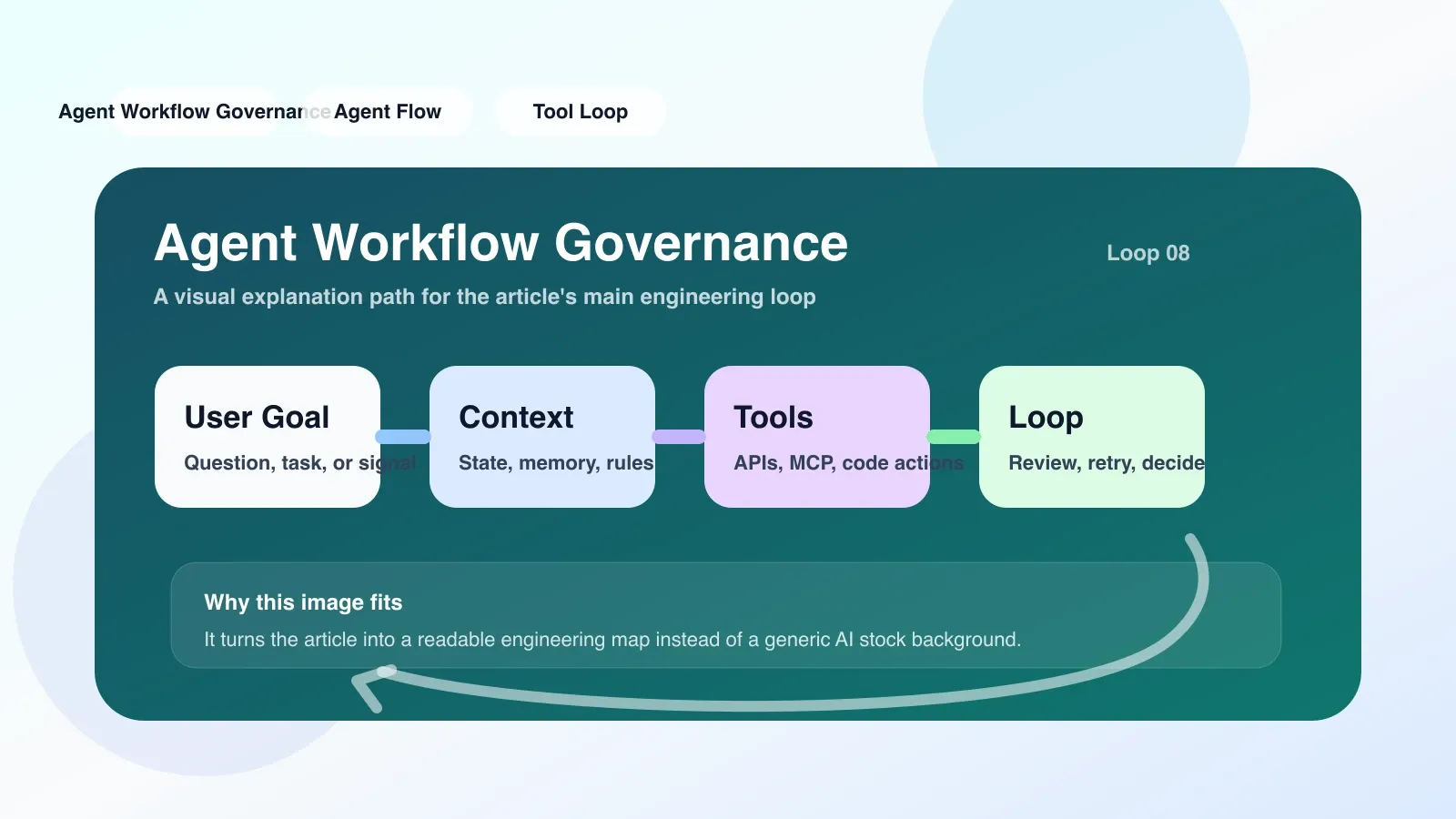
5 engineering lessons I learned after #Agent Workflow Governance blew up
Over the past few months, Agent workflow governance has gone from a niche DevOps concept to a hot topic among AI engineering teams. I led the team to try to implement the governance checklist in three projects, and made many mistakes in the process. This article would like to share the 5 most critical lessons, combined with a real failure scenario, to help you avoid detours in your own Agent system.
Lesson 1: Don’t treat permission control as a post-processing task
When I first led a team to do Agent workflow governance, I first set up an orchestration engine and task queue, and only used a set of static API keys for permission control. On the third day after going online, an Agent called the writing interface of a production database due to incorrect environment variables, causing the test environment data to be confused.
Lesson: Permissions must be made clear during the workflow definition phase. What resources each Agent can access and what APIs it can call must be restricted by fine-grained policies (such as OAuth 2.0 scope or SPIFFE identity). In the governance checklist, "minimize permissions" is not a slogan, but a check item: each step of each workflow must declare the permissions it requires and verify them at the orchestration layer.
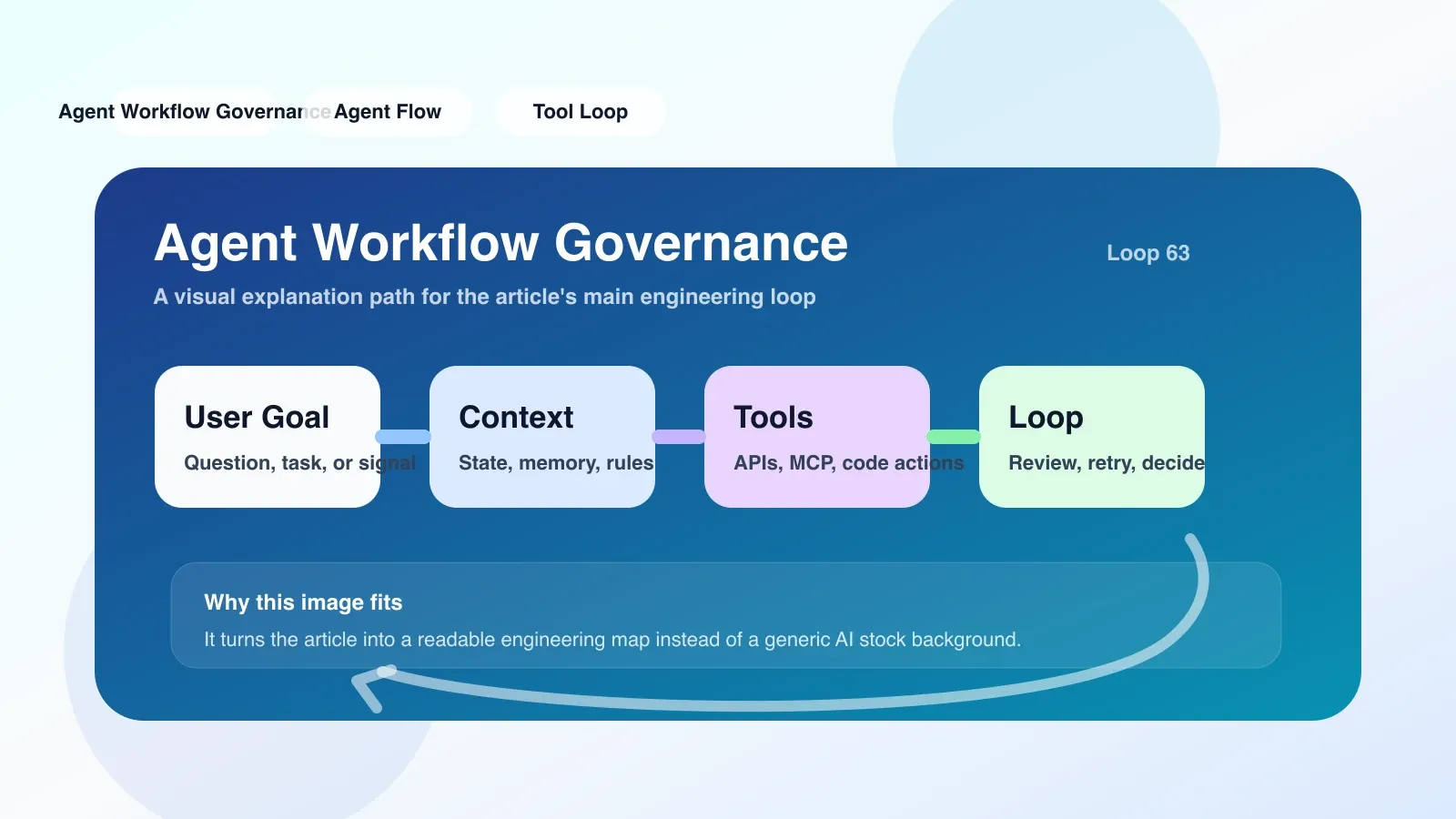
Lesson 2: State management is more fragile than you think
Agent workflows are often executed across multiple services and even across clusters. I have seen a project use memory variables to save intermediate states. When the worker node is restarted, all ongoing workflows are lost, and the business side loses several hours of calculation results.
Correct approach: Use a persistent state store such as Redis Streams or process records in a database. A checkpoint is written after each step is completed, and in the event of failure, you can recover from the latest checkpoint. In the checklist, "state persistence" should describe the storage method and recovery logic of each state (pending, running, completed, failed).
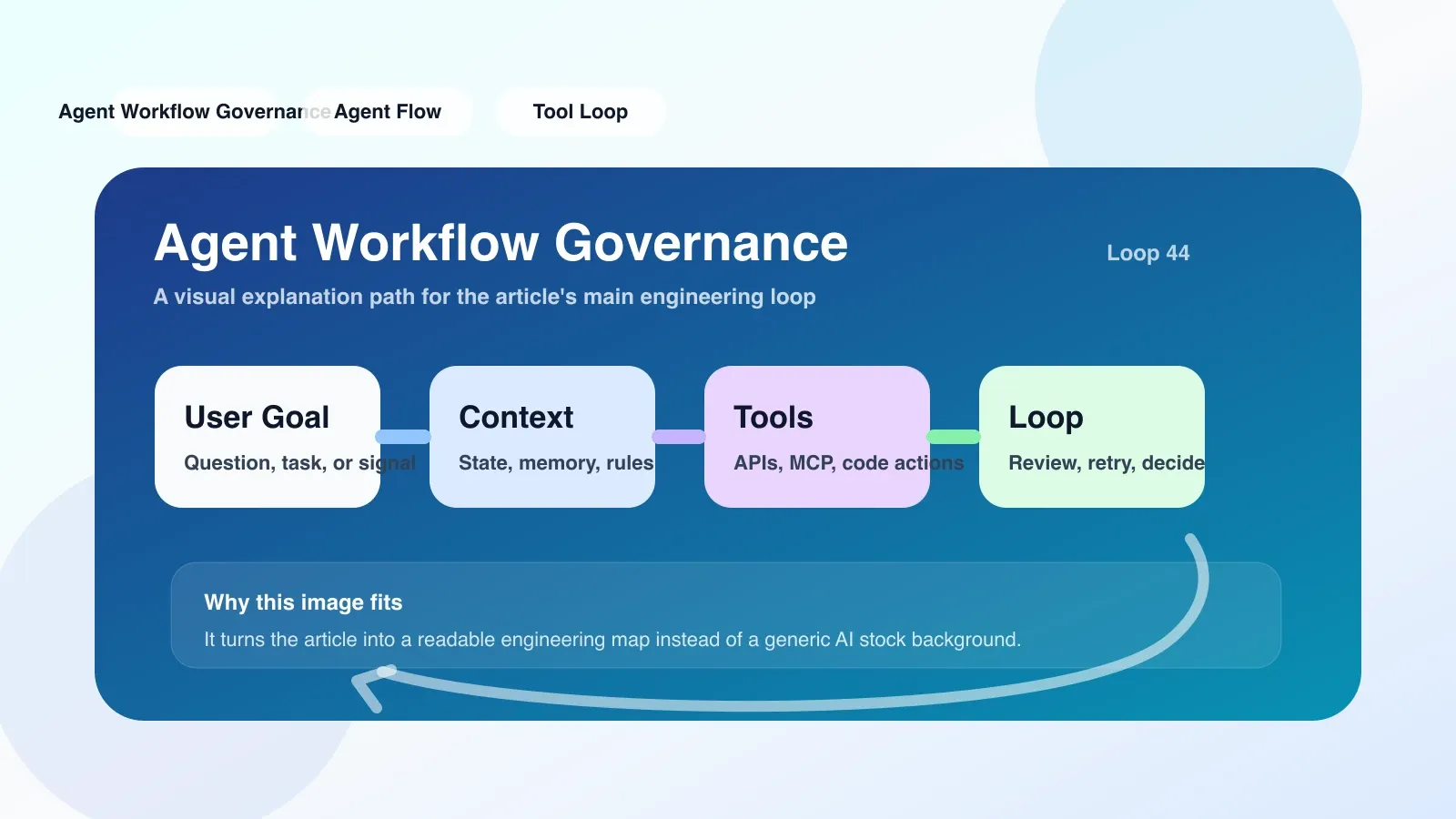
Lesson 3: Failure handling cannot rely solely on retries
Another team wrote "automatically retry 3 times on failure" in the governance checklist. As a result, a third-party API returned 429 current limiting errors three times in a row. After all retries failed, the workflow directly entered the dead letter queue without any notification.
Lesson: The retry strategy must be combined with a backoff algorithm (such as exponential backoff + jitter) and a circuit breaker. At the same time, it is necessary to set up an alarm and manual intervention process when "retries are exhausted". In the checklist, you need to check whether the failure category (retryable vs. non-retryable) is defined, whether the maximum number of retries and the retry interval are configured, and whether an alarm is triggered after the retries are exhausted.
Lesson 4: Observability must cover end-to-end
A workflow without observability is like a black box. I once worked on a project where the operation and maintenance team could only locate problems by viewing the logs of each Agent, which was extremely inefficient.
Improvement: Inject tracing (like OpenTelemetry) at the beginning and end of each step to bring the workflow ID to each log and metric. In the governance checklist, observability check items include: whether there is a global trace ID, whether step-level time-consuming indicators are collected, and whether SLA alarms are set.
Lesson 5: Security compliance is not a one-time task
Some customers require that all Agent workflows must pass SOC 2 audits. We initially only performed a static scan, but during the audit we found that a certain workflow step wrote sensitive tokens into the log.
Lesson: Security compliance needs to be embedded in the execution of every step. For example, use a secret management service such as HashiCorp Vault to inject sensitive information and filter out sensitive fields before outputting. In the checklist, security checks should include: input validation, output filtering, encrypted transmission, and audit logs.
A real scenario: from crash to restart
Give a specific example. We are responsible for the account opening review Agent workflow of a financial customer, which includes three steps: identity verification, credit assessment and manual review. Everything went fine for the first month after going online. Until one day when the credit evaluation API upgraded its return format, our Agent did not perform schema verification and directly threw an exception. Since the "non-retryable exception" category is not defined in the checklist, the workflow enters an infinite loop, constantly retrying, failing, and retrying again. Finally, the worker thread pool is overwhelmed, causing other workflows to also time out.
After review, we added three items to the governance checklist:
- Each step must explicitly declare the input/output schema it expects.
- Exception classification: Format errors are considered non-retryable, and an alert will be issued immediately and the workflow will be suspended.
- The maximum number of concurrent workers must be set. If the number is exceeded, new requests will be rejected.
This failure made us understand: the governance checklist is not written to look good, but needs to be reviewed after every change.
Next step
If you are transitioning from an ordinary developer to an Agent engineer, the above lessons should help you avoid several big pitfalls. But these are just the tip of the iceberg—a truly systematic approach includes design patterns, testing strategies, and deployment automation. If you want to master all the knowledge of Agent workflow governance in depth, I have compiled a more systematic set of original paid articles and courses, covering complete enterprise-level governance solutions.
No comments yet. Be the first to share your thoughts.